
Side Dishes
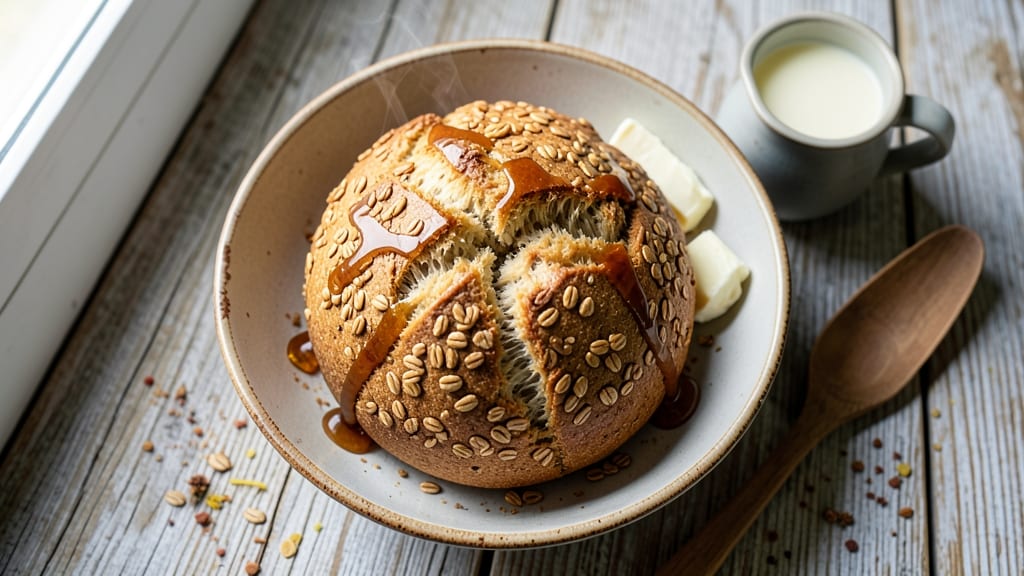
This Amish oatmeal bread recipe brings hearty, rustic warmth to your table with its signature nutty flavor and satisfying texture—perfect for sandwiches, toast, or serving alongside soups. 🌾 The secret lies in the combination of steel-cut oats and a touch of honey, creating a loaf that's both hearty and subtly sweet, just like traditional Amish baking.
What makes it special is the slow fermentation process, which develops deep flavor while keeping the crust crisp and the crumb tender.
The recipe delivers restaurant-quality results at home with simple ingredients you likely already have: all-purpose flour, steel-cut oats, yeast, and a pinch of salt. Unlike quick breads, this version requires patience—kneading, proofing, and baking all contribute to its distinctive texture.
The oats add a satisfying crunch, while the honey infuses just enough sweetness to balance the bread's earthy notes.
What you'll end up with is a golden-brown loaf with a rustic, cracked crust and a moist interior studded with oats. The aroma alone will fill your kitchen with nostalgia, transporting you to a cozy Amish kitchen.
This bread stays fresh for days, making it ideal for meal prep or gifting.
Whether you're serving it with butter for breakfast or using it for classic Amish-style sandwiches, this recipe captures the essence of traditional baking. The process is straightforward but rewarding—perfect for both beginners and experienced bakers looking to add a touch of heritage to their repertoire.
Ingredients for amish oatmeal bread
Nine simple ingredients transform into a rustic loaf with nutty warmth and crisp crust.
| Ingredient | Amount | Notes |
|---|---|---|
| All-Purpose Flour 🌾 | 4 cups | Sifted for even texture |
| Steel-Cut Oats 🥣 | 1 cup | Coarsely chopped for texture |
| Active Dry Yeast 🍞 | 2 ¼ tsp | One packet for convenience |
| Granulated Honey 🍯 | ¼ cup | Light variety preferred |
| Unsalted Butter 🧈 | ½ cup | Cold, cubed for easier mixing |
| Warm Milk 🥛 | 1 cup | 110°F for yeast activation |
| Large Eggs 🥚 | 1 whole | Room temperature for blending |
| Diamond Crystal Kosher Salt 🧂 | 1 ½ tsp | Adjust to taste |
| Granulated Sugar 🍚 | 1 tbsp | For yeast feeding |
| Cornmeal 🌽 | ¼ cup | For bread pan dusting |
| Water 💧 | ¼ cup | For dough consistency |
The steel-cut oats are the heart of this bread—Bob's Red Mill or Quaker Old Fashioned work best. Avoid instant oats; they cook down too much. Chop them coarsely for texture, but don't grind them into flour. For the yeast, FreshPact packets are foolproof, but if using granulated, make sure it's fresh (test by dissolving in warm water with sugar—it should foam within 10 minutes). The butter matters too: Plugrá or Land O'Lakes work well, but avoid salted varieties. Warm the milk to 110°F—too hot kills the yeast, too cold slows activation. If your kitchen runs cold, microwave it for 20 seconds, then check the temperature.
No steel-cut oats? Old-fashioned rolled oats work in a pinch (just don't pulse them in the food processor). Short on honey? Maple syrup or agave nectar at the same amount, but taste first—some varieties can overpower. The recipe calls for unsalted butter, but if that's all you have, reduce the salt to 1 tsp. For a richer dough, replace 2 tbsp of milk with heavy cream. The cornmeal is non-negotiable for that classic Amish crust—don't skip it. If you're baking at high altitude, add 1 tbsp extra flour to prevent spreading. And if your kitchen is humid? Use a bread machine setting for more reliable proofing.
This bread keeps beautifully—3-4 days at room temperature wrapped in a clean kitchen towel, or 1 week in the fridge. For longer storage, freeze the loaf (unwrapped) for up to 3 months. To reheat, wrap in foil and warm in a 350°F oven for 10 minutes. The crust gets crispier with reheating, almost like fresh from the oven. I always slice mine with a serrated knife for clean cuts, and the oats keep it satisfyingly dense. Perfect for toast, sandwiches, or serving with butter and jam for breakfast.
Why You'll Love This Recipe
- No-Knead Magic: I swear by this—just mix, let it rise, and bake. The steel-cut oats do all the work for you, giving that rustic texture without a single punch of dough.
- Honey-Butter Bliss: That honey isn’t just sweet—it’s rich and golden, cutting through the hearty oats while the butter keeps every bite tender. (Yes, even on a Tuesday night.)
- Weeknight Wonder: Freeze half the loaf and pull it out when you’re too tired to bake. Toast it straight from frozen, and no one will guess it’s not fresh-baked.
- Pantry Staple Power: Flour, oats, yeast—ingredients you already own. No fancy swaps, no last-minute grocery runs. This bread is your budget-friendly, foolproof sidekick.
Step-by-step instructions for Amish oatmeal bread
Here's how to craft that signature rustic crust and nutty interior—no shortcuts, just perfect technique.
👨🍳 Step 1: Activate the Yeast with Honey and Warm Milk
In a small bowl, whisk together the 1 cup warm milk (test temperature with your finger—it should feel like bathwater, around 110°F) with the 1 tbsp granulated sugar and 2.25 tsp active dry yeast. Let this sit for 5-10 minutes until it becomes frothy and bubbly. This is your yeast activation test—if nothing happens after 10 minutes, your yeast might be dead, and you'll need to start over.
While waiting, coarsely chop the 1 cup steel-cut oats in a food processor or pulse them in a blender for 10-15 seconds—you want them broken down but still retaining some texture. This prevents the bread from becoming too dense. The oats will release their nutty flavor during baking, creating that signature Amish warmth you're after.
🍳 Step 2: Mix Wet Ingredients and Combine with Dry
In the bowl of a stand mixer fitted with the dough hook, combine the 4 cups sifted all-purpose flour, 1.5 tsp diamond crystal kosher salt, and the chopped oats. Mix on low speed for 30 seconds to distribute everything evenly. In a separate bowl, whisk together the 0.25 cup granulated honey, 0.5 cup cold cubed unsalted butter, 1 whole large egg, and the yeast-milk mixture.
With the mixer running on low speed, slowly pour in the wet ingredients while scraping down the sides of the bowl. Increase the speed to medium and mix for 5 minutes until the dough begins to pull away from the sides of the bowl. You're looking for a smooth, slightly sticky dough that forms a "windowpane" when stretched—this means the gluten has developed properly and your bread will have that satisfying chew.
🥘 Step 3: Knead and Let the Dough Rest
Continue kneading on medium-high speed for an additional 4-5 minutes until the dough is elastic and springs back when gently pressed. If it feels too sticky, add the 0.25 cup water 1 tablespoon at a time until it reaches the perfect consistency. Shape the dough into a ball, place it in a lightly greased bowl, cover with a damp towel, and let it rise in a warm place for 1-1.5 hours or until it has doubled in size.
Here's the thing—Amish oatmeal bread relies on proper fermentation for that rustic flavor. Don't rush this step. You'll know it's ready when the dough puffs up significantly and leaves an indent when pressed gently with a finger. If your kitchen isn't warm enough, place the bowl near a slightly warmed oven with the light on to help speed up the process.
🔥 Step 4: Shape and Bake for a Rustic Crust
Preheat your oven to 375°F and lightly grease a 9x5-inch loaf pan. Generously dust the pan with 0.25 cup cornmeal to prevent sticking. Punch down the risen dough and shape it into a loaf, tucking the edges under neatly. Place the dough seam-side down in the prepared pan and cover it loosely with a towel. Let it rise for another 30-45 minutes until it domes slightly above the pan.
Bake the bread for 45-50 minutes until the top is deep golden brown and sounds hollow when tapped on the bottom. The internal temperature should reach 190-200°F when measured with an instant-read thermometer. If the top browns too quickly, tent the bread with aluminum foil to prevent over-browning while it continues to bake through.
⏰ Step 5: Cool and Slice for Maximum Flavor
Remove the bread from the oven and let it cool in the pan for 10 minutes, then transfer it to a wire rack to cool completely. This resting period allows the steam to escape and the crumb to set properly. The bread will be at its peak texture and flavor after 1-2 hours of cooling—don't be tempted to slice it immediately or you'll end up with a gummy interior.
Slice the bread into 1-inch thick pieces and serve warm with a pat of butter or a smear of honey. The crust should be crisp with a beautiful golden hue, while the interior will have a tender crumb speckled with those nutty oat flecks. This bread keeps well at room temperature for 2-3 days or can be frozen for up to 3 months—perfect for making ahead.
Pro Tips For Making Amish Oatmeal Bread
- Toast the Oats: Steel-cut oats taste bland straight from the bag—toss them in a dry skillet over medium heat for 5-7 minutes until golden and nutty. I learned this the hard way: skipping this step means your bread will taste like oatmeal cereal, not homemade bread.
- Proof the Yeast Warm: Active dry yeast needs warmth to wake up—mix it with honey and warm water (105-110°F) and let it sit until foamy (5-10 minutes). Cold water kills it, and you’ll end up with flat bread that tastes like cardboard.
- Don’t Overmix the Dough: Stir just until the flour is incorporated—overworking the dough makes it tough. The oats and butter are heavy enough; resist the urge to punch it down like sourdough. Your bread will stay tender if you keep it gentle.
- Brush with Honey: After baking, let the bread cool 5 minutes, then brush the top with a little extra honey mixed with water. It’s the easiest way to get that glossy finish and extra sweetness without making the dough sticky. (Yes, even if you’re impatient like me.)
Flavor customization for this dish
Sweet Variations
Swap the honey for maple syrup or agave nectar—both add a deeper sweetness that pairs beautifully with the oats. For a caramelized twist, add 2 tbsp brown sugar to the dough and sprinkle 1 tbsp turbinado sugar on top before baking for a crispy, amber crust.
I love adding ½ tsp cinnamon or ¼ tsp nutmeg for a subtle spiced warmth that feels like autumn in every bite. 🍯
Savory Twists
Transform this into a savory loaf by omitting the honey and adding 1 tbsp olive oil to the dough. Stir in 1 tsp dried rosemary or thyme for an herbed variation, or mix in ½ cup grated Parmesan for a cheesy, crusty bread perfect for soups.
For a smoky flavor, add ½ tsp smoked paprika or a pinch of garlic powder—this version is ideal for sandwiches or toast with avocado. 🧄
Extra Crunchy Oats
For maximum texture, toast the steel-cut oats in a dry skillet over medium heat for 5 minutes, stirring constantly, until golden brown. This deepens their nutty flavor and adds an irresistible crunch.
Alternatively, pulse ½ cup oats in a food processor until they resemble coarse sand—this creates pockets of oatmeal throughout the crumb. I find this works especially well when combined with a touch of cinnamon sugar on top before baking. 🥣
Seeded Enhancements
Boost nutrition and texture by adding 2 tbsp sunflower seeds, pumpkin seeds, or flaxseeds to the dough. For a classic Amish touch, stir in 1 tbsp ground flaxseed along with 1 tbsp chopped walnuts—this adds a delightful crunch and earthy depth.
If you love seeds, try toasting them first in a dry pan for 2-3 minutes to enhance their flavor. 🌰
Whole Grain Boost
Replace 1 cup of all-purpose flour with whole wheat flour or spelt flour for a nuttier, heartier loaf. For a lighter texture, use half whole wheat and half white flour.
I’ve also had great success with 1 cup rye flour, which adds a subtle tang that balances the sweetness. Just be mindful—whole grains absorb more liquid, so you may need to add an extra 1 tbsp water if the dough feels too dry. 🌾
Gluten-Free Adaptation
For a gluten-free version, replace the all-purpose flour with a 1:1 gluten-free baking flour blend (like Bob’s Red Mill) and add ½ tsp xanthan gum to improve texture. Use ½ cup gluten-free oats (certified) and reduce the water by 2 tbsp to account for the blend’s moisture content.
This adaptation keeps the rustic texture but requires extra kneading—gluten-free doughs benefit from 5-7 minutes of hand-kneading for structure. 💪
Nutrition facts
Frequently asked questions
Why does Amish oatmeal bread need steel-cut oats instead of rolled oats?
Steel-cut oats retain their shape better during baking, creating that signature crunchy texture Amish bread is known for. Rolled oats soften too much, losing their bite. The coarser texture also releases nutty flavors more gradually as you chew. For best results, chop them coarsely in a food processor—just 10-15 pulses—to keep some texture while preventing a dense loaf.
Can I make this bread without a stand mixer?
The dough can be mixed and kneaded by hand on a floured surface for 8-10 minutes until elastic. Use your knuckles to test doneness—if it springs back slowly, it's ready. For the yeast activation step, just whisk vigorously by hand. The key is patience: knead until the dough feels smooth and slightly tacky, not sticky. A wooden spoon helps scrape the sides of the bowl during mixing.
What's the best way to store leftover Amish oatmeal bread?
Wrap the cooled loaf tightly in a clean kitchen towel or beeswax wrap to preserve freshness for 3-4 days at room temperature. For longer storage, freeze the unwrapped loaf for up to 3 months. To reheat, wrap slices in foil and warm in a 350°F oven for 5-7 minutes—this restores the crust's crispness. The bread actually improves overnight as the starches firm up!
Why did my bread turn out dense instead of light and airy?
Dense bread usually means the yeast didn't activate properly or the dough wasn't kneaded enough. Double-check your yeast by testing it first in warm water with sugar—it should foam within 5-10 minutes. Also ensure you kneaded until the dough passes the windowpane test (stretches thin without tearing). If your kitchen is cold, place the dough near a warm oven with the light on to help it rise properly. Overmixing can also cause density, so stop when the dough is just slightly sticky.
How can I make this bread sweeter without adding more sugar?
Swap the honey for maple syrup or agave nectar—they're naturally sweeter and add depth. For a caramelized touch, sprinkle 1 tbsp turbinado sugar on top before baking. Adding ½ tsp cinnamon or ¼ tsp nutmeg enhances sweetness perception too. Even the toasted oats release more natural sweetness when browned in a dry skillet first. These small tweaks create a sweeter loaf without extra sugar.