
Side Dishes
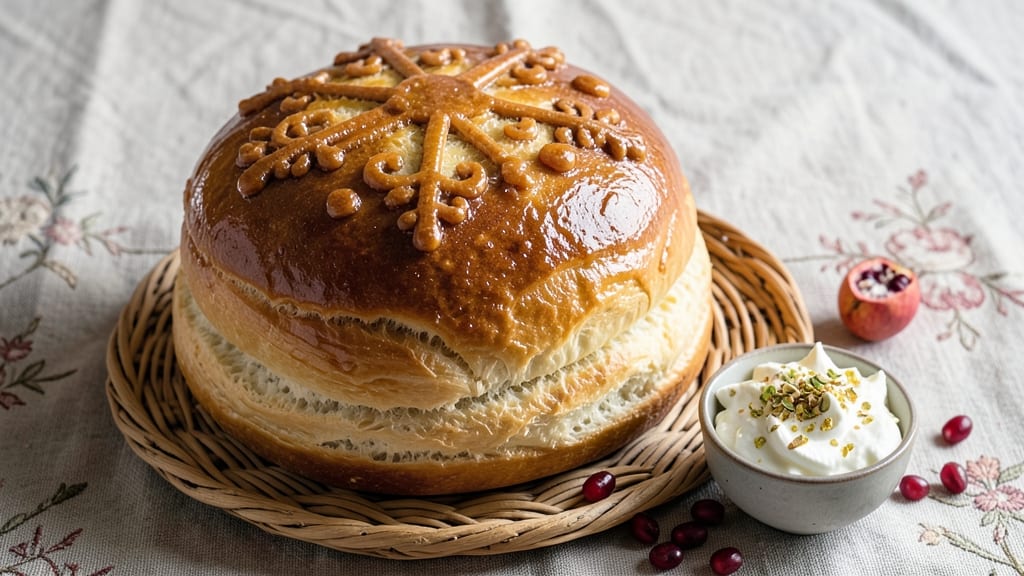
This Armenian Easter Choreg recipe brings centuries of tradition to your kitchen with its fragrant blend of cardamom and bright orange zest. 🌟 Unlike ordinary sweet breads, Choreg carries deep cultural meaning—baked to celebrate Easter and shared as a symbol of renewal and prosperity.
The dough's rich texture and subtle spices create a loaf that's as beautiful as it is delicious, perfect for festive occasions or special gatherings.
The recipe begins with a simple yet precise dough made from flour, eggs, butter, sugar, and yeast, kneaded to develop gluten for that signature tender yet slightly chewy texture. Cardamom and orange zest infuse the dough with warmth and brightness, while optional raisins or nuts add texture and sweetness.
The dough rests overnight, allowing flavors to meld and creating a loaf that's impossible to resist.
Shaping Choreg into braided loaves transforms it into a centerpiece worthy of any holiday table. Baking until golden brown reveals a crisp exterior and a soft, fragrant interior that's perfect for slicing and sharing.
The aroma alone will transport you to Armenia, where this bread has been a cherished tradition for generations.
Whether you're baking for Easter or simply craving something special, this recipe delivers restaurant-quality results with a touch of cultural heritage. The process is straightforward, but the reward—a beautifully braided loaf filled with warm, comforting flavors—is unforgettable.
Ingredients for armenian easter bread choreg
Six ingredients make the base, plus a few extras for that special touch.
| Ingredient | Amount | Notes |
|---|---|---|
| All-Purpose Flour 🌾 | 4 cups | Sifted for light texture |
| Unsalted Butter 🧈 | 1 cup | Cold, cubed for easier mixing |
| Granulated Sugar 🍚 | ¾ cup | Superfine preferred for smoothness |
| Large Eggs 🥚 | 2 whole | Room temperature for even mixing |
| Active Dry Yeast 🍞 | 2 ¼ tsp | Fresh yeast if available |
| Warm Milk 🥛 | ¾ cup | Whole milk, 110°F |
| Ground Cardamom 🌿 | 1 ½ tsp | Freshly ground for best flavor |
| Orange Zest 🍊 | 1 tbsp | Bright organic orange preferred |
| Salt 🧂 | ½ tsp | Fine sea salt preferred |
| Raisins 🍇 | ½ cup | Optional, soaked in warm water |
| Pistachios 🥜 | ½ cup | Chopped, optional for crunch |
| Egg Wash 🥚 | 1 whole | Beaten with 1 tbsp water |
| Coarse Sugar 🍚 | ¼ cup | For topping before baking |
The flour is your foundation—King Arthur or Gold Medal work best for that tender crumb. Butter matters here: Plugrá or Land O'Lakes unsalted melt beautifully, but don't use salted. Cardamom? Penzeys or Middle Eastern markets have the good stuff—skip the grocery store's dusty pods. Orange zest needs to be fresh (the good stuff, not the pre-grated kind)—organic Navel or Valencia oranges give the brightest flavor. If you're feeling fancy, soak the raisins in warm water for 20 minutes first—they'll plump up and taste better.
No cardamom? 1/2 tsp cinnamon plus 1/4 tsp ginger gets you close, but it won't be the same. Short on pistachios? Chopped almonds or walnuts work fine—just toast them first for extra flavor. The yeast is non-negotiable here, but if you're at high altitude, use 1/4 tsp less. Milk too hot? Let it cool to 110°F—any hotter and you'll kill the yeast. And that coarse sugar topping? Turbinado or raw cane sugar gives the best caramelized crust. Don't skip it—it's worth the extra minute.
This dough needs time—at least 8 hours overnight in the fridge. The longer it rests, the better it gets. Wrap it tightly in plastic wrap or a damp towel to keep it from drying out. For the braid, divide into three equal parts—about 12 oz each. If you're not baking it right away, freeze the shaped loaves (unbaked) for up to 1 month. The aroma when it's baking? That's the real magic—worth every minute of waiting.
Why You'll Love This Recipe
- No-Knead Magic: I swear by this dough—just mix the flour, butter, sugar, and yeast, then let it rise overnight. No rolling, no fuss, just wake up to a golden, pillowy loaf ready for shaping.
- Sweet Butter Bliss: That rich, unsalted butter baked into the crust? It’s what makes this bread dangerously good. The sugar caramelizes just enough to give every bite a subtle, melt-in-your-mouth sweetness—no extra syrup needed.
- Easter Centerpiece: Between us, this is the bread that steals the show at holiday tables. It’s sturdy enough to hold fruit preserves or nuts, but light enough to feel special. (My in-laws still ask for the recipe every year.)
- Budget-Friendly Luxury: Five ingredients, one rise, and you’ve got a bakery-worthy loaf that costs pennies per serving. Freeze half the dough for later—because nothing says “I care” like homemade bread that lasts.
Step-by-step instructions for Armenian Easter bread Choreg
This traditional Armenian sweet bread comes together with layers of flavor—here's how to make it shine.
👨🍳 Step 1: Activate the Yeast and Mix the Dough
In a small bowl, whisk together the 0.75 cup warm milk, 2.25 tsp active dry yeast, and 1 tbsp orange zest. Let it sit for 5-10 minutes until it becomes frothy and bubbly—this means your yeast is alive and ready to work. If it doesn't bubble, your yeast might be stale, and you'll need to start over.
In a large bowl, combine the 4 cups all-purpose flour (sifted for a light texture) with the 1.5 tsp ground cardamom, 0.5 tsp salt, 0.5 cup raisins, and 0.5 cup chopped pistachios. Make a well in the center and pour in the yeast mixture, 1 cup cold cubed butter, and 0.75 cup granulated sugar. Mix with a wooden spoon until the dough starts to come together, then turn it out onto a lightly floured surface.
👨🍳 Step 2: Knead Until Smooth and Elastic
Knead the dough for 8-10 minutes by hand or 5-6 minutes with a stand mixer fitted with a dough hook. You're looking for a smooth, elastic dough that springs back when poked—this means the gluten has developed properly. If the dough feels sticky, add flour 1 tablespoon at a time until it comes together without sticking.
Here's the thing—this dough needs time to relax. After kneading, place it in a lightly oiled bowl, cover it with a damp towel, and let it rise in a warm place for 1-2 hours or until it has doubled in size. I like to put my oven on its lowest setting with a cup of boiling water underneath to create a warm, cozy environment for the dough to rise.
🔥 Step 3: Shape and Second Rise
Once the dough has risen, punch it down to release the air and shape it into a round loaf about 8 inches in diameter. Place it on a parchment-lined baking sheet and let it rise again for 30-45 minutes until it puffs up noticeably. This second rise is crucial—it ensures your bread will be light and airy.
While the dough rises, preheat your oven to 350°F. Brush the risen dough with the egg wash (1 whole egg beaten with 1 tbsp water) and sprinkle evenly with the 0.25 cup coarse sugar for that beautiful caramelized crust we all love. The sugar will melt slightly during baking, creating a sweet, crunchy topping.
🔥 Step 4: Bake to Golden Perfection
Bake the choreg for 30-35 minutes until it's golden brown and sounds hollow when tapped on the bottom. The edges should pull away from the sides of the pan, and the sugar topping should be caramelized but not burned. If the top browns too quickly, tent it loosely with foil to prevent over-browning while the center finishes baking.
I know it's tempting to check it early, but resist! The bread needs that full baking time to develop its flavor and texture. Once it's done, transfer it to a wire rack to cool completely before slicing—this prevents the sugar topping from turning sticky and ensures clean cuts.
⏰ Step 5: Rest and Serve
Let the choreg cool completely before slicing—this can take up to 1 hour. The longer it rests, the better the flavors will meld together. Once cooled, slice it into thick wedges and serve it warm or at room temperature. The combination of warm, spiced dough, sweet raisins, crunchy pistachios, and caramelized sugar makes every bite a celebration of Armenian tradition.
This bread is especially meaningful during Easter, symbolizing the sweetness of new life and the joy of the season. Store any leftovers in an airtight container for up to 3 days, or freeze for longer storage. Trust me, the aroma alone will make your kitchen feel like a festive gathering!
Pro Tips For Making Armenian Easter Bread Choreg
- Proof It Twice: Choreg dough is finicky—don’t rush the first rise. After mixing, let it sit in a warm spot (like a turned-off oven with a bowl of hot water) until it’s almost doubled, then punch it down and let it rise a second time. I learned this the hard way when my first attempt collapsed like a sad soufflé. Two rises = sturdy, flavorful bread.
- Soften Butter Properly: Room-temperature butter is key—no melting, no cold lumps. Press the butter between two sheets of parchment, slide it under a hot faucet for 30 seconds, or microwave in 10-second bursts until it’s pliable but not greasy. Cold butter = tough dough; melted butter = greasy mess. Test by pressing your finger in—it should leave a slight dent.
- Don’t Overmix Eggs: Whisk the eggs just until combined—no need for fluffy meringue. Overwhisking adds air that’ll deflate during baking, leaving you with a dense, flat loaf. My grandmother called it "beating the soul out of the bread." Fold them in gently with a spatula, like tucking in a blanket.
- Bake with Steam: Spritz the loaf pan with water before baking—this creates steam that helps the crust rise smoothly. I skip this and end up with a cracked, uneven top every time. For extra insurance, place a metal bowl of boiling water in the oven’s lower rack while preheating. The bread will thank you with a golden, even crust.
Essential equipment for perfect results
Dough Tools
Start with a stand mixer fitted with the dough hook attachment—this makes kneading the 4 cups flour and 1 cup butter effortless. I swear by my KitchenAid Professional 600W for this recipe; it handles the dense dough beautifully without overheating.
If you're mixing by hand, use a wooden spoon first, then your knuckles for kneading—it's more effective than you'd think! 💪
Measuring Essentials
Precision matters here, especially with the 2.25 tsp yeast and 1.5 tsp cardamom. Invest in a digital kitchen scale for accurate measurements—my OXO Good Grips makes short work of weighing the 4 cups flour and 0.75 cup sugar.
For zest, a Microplane gives you the brightest, most flavorful results compared to a box grater. Never skip measuring the orange zest—it's the secret to that signature citrusy aroma.
Baking Gear
A 9x13-inch baking sheet is perfect for shaping the dough, but line it with parchment paper to prevent sticking—trust me, it saves cleanup time. For the egg wash, use a pastry brush to distribute it evenly before sprinkling the 0.25 cup coarse sugar.
Preheat your oven to 350°F using the middle rack for even baking. A thermometer helps verify the internal temperature reaches 190°F for perfect doneness.
Cooling and Storage
After baking, transfer the choreg to a wire cooling rack—this prevents the sugar topping from turning soggy. For long-term storage, wrap cooled slices in plastic wrap or place the whole loaf in an airtight container with a paper towel to absorb moisture.
If freezing, slice first and store in a freezer bag for up to 3 months. The OXO Good Grips also doubles as a handy tool for slicing thick wedges without crushing the texture.
Optional Extras
Want to add raisins or pistachios? Use a small bowl to soak raisins in warm water for 20 minutes—this plumps them up beautifully. For chopping nuts, a sharp chef's knife or food processor works best.
If you're feeling fancy, a spray bottle with warm water keeps the dough from sticking while shaping. And for that final touch, a fine-mesh sieve helps distribute the sugar evenly over the egg wash. 🌟
Nutrition facts
Frequently asked questions
Can I make Choreg without cardamom?
Yes! While cardamom is traditional, you can substitute ½ tsp cinnamon + ¼ tsp ginger for warmth. For a closer flavor, try 1 tsp orange blossom water (found in Middle Eastern markets) instead. The citrus notes will still shine through, but the spice profile will differ slightly.
Why does my dough smell like yeast but not rise?
This usually means your yeast was inactive or the milk was too hot. Always check yeast freshness first—it should bubble within 5-10 minutes in warm milk (110°F). Try again with fresh yeast or test it in a small bowl with 1 tsp sugar before mixing with dough. If your kitchen is cold, place the dough bowl near a warm oven with the light on to help it rise.
How do I shape Choreg into the traditional braided loaf?
Divide the dough into 3 equal parts (~12 oz each). Roll each into a 12-inch rope, then braid them together starting from the center. Tuck the ends under and place seam-side down on your baking sheet. For extra security, pinch the braid together at the ends. Watch a 3-minute tutorial if you're unsure—visual guidance helps!
Can I bake Choreg ahead of time?
Shape the loaves 1 day ahead and refrigerate them (unbaked) in an airtight container. Bake straight from the fridge—add 5-10 minutes to your baking time. For best results, let it cool completely before slicing. The flavors actually improve overnight! You can also freeze shaped loaves for up to 1 month—thaw overnight before baking.
What makes Choreg different from other sweet breads?
Choreg stands out for its cardamom-orange zest combination, which gives it a unique floral-citrus aroma. Unlike brioche (richer, buttery) or challah (egg-heavy, braided), Choreg has a lighter texture with subtle sweetness and nutty crunch from pistachios. Its cultural significance as an Easter symbol—representing prosperity—also sets it apart from everyday breads.