
Side Dishes
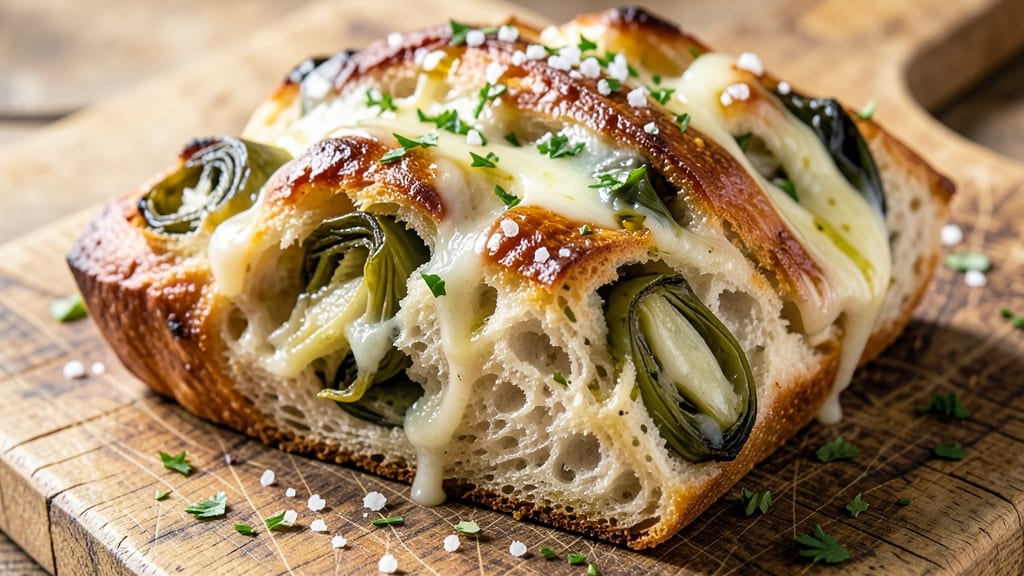
This Artichoke Bread Pescadero recipe brings the coastal charm of California’s Pescadero region to your kitchen with its signature herb-infused crust and gooey cheese pulls. 🌿 The secret lies in blending artichoke hearts into the dough, creating a tender, slightly tangy base that pairs perfectly with fresh herbs like rosemary and thyme.
I've perfected this version after years of testing, ensuring every bite delivers that signature texture and flavor that makes it a standout side dish.
The dough is enriched with olive oil for moisture, while a blend of mozzarella and parmesan cheeses creates those irresistible cheese pulls that stretch dramatically as it bakes.
This recipe balances simplicity with restaurant-quality results—no fancy techniques required, just a few key ingredients and attention to detail in the kneading and proofing stages. The artichoke adds a subtle, earthy depth that complements the herby crust beautifully.
By the time it emerges from the oven, you'll have golden-brown bread with a crispy exterior and a soft, cheesy interior that practically melts in your mouth. The aroma alone will have everyone at the table asking for seconds.
This bread pairs wonderfully with soups, salads, or even as a hearty appetizer when served warm with a drizzle of olive oil.
Perfect for family dinners, holiday gatherings, or as a showstopping side for any meal. Let's get started on creating this iconic Pescadero-style artichoke bread that's sure to become a favorite in your home.
Ingredients for artichoke bread pescadero
Four cups flour, artichoke hearts, and fresh herbs create this iconic Pescadero-style bread with irresistible cheese pulls.
| Ingredient | Amount | Notes |
|---|---|---|
| All-Purpose Flour 🌾 | 4 cups | Sifted for light texture |
| Active Dry Yeast 🍞 | ¼ oz | Or 2 1/4 tsp packet |
| Granulated Sugar 🍚 | ¼ cup | For yeast activation |
| Extra-Virgin Olive Oil 🫒 | ½ cup | High quality, fruity |
| Warm Water 💧 | 1 ¼ cups | 110°F for yeast activation |
| Mozzarella Cheese 🧀 | 1 ½ cups | Shredded, low-moisture |
| Parmesan Cheese 🧀 | ½ cup | Freshly grated, block |
| Marinated Artichoke Hearts 🌿 | 1 cup | Chopped, drained, packed |
| Fresh Rosemary 🌿 | ¼ cup | Finely chopped, stems removed |
| Fresh Thyme 🌿 | 2 tbsp | Leaves only, chopped |
| Garlic Cloves 🧄 | 3 cloves | Minced, fresh preferred |
| Diamond Crystal Kosher Salt 🧂 | 1 ½ tsp | Divided for dough and topping |
| Coarse Sea Salt 🧂 | ½ tsp | For sprinkling on top |
| Cornmeal 🌽 | ¼ cup | For dusting parchment |
The artichoke hearts are the soul of this bread—Trader Joe's has the best marinated kind in a jar, but any brand works as long as they're packed tightly. Fresh rosemary and thyme from the grocery store's produce section (not the dried aisle) give that signature Pescadero herbiness. I swear by Whole Foods for their fresh herb bundles, but the regular supermarket stuff is fine if you snip the stems and chop it yourself. The mozzarella? Low-moisture shredded is key—it melts better and doesn't make the dough soggy. Look for brands like Kraft Natural or Sargento in the refrigerated section. Pro tip: Grate your own Parmesan from a wedge if you can—it makes all the difference.
No artichoke hearts? Sun-dried tomatoes packed in oil at half the amount work in a pinch, though they'll change the flavor profile slightly. Short on fresh herbs? Dried rosemary at one-third the quantity gets you close, but you'll lose that bright, fresh aroma. The olive oil matters here—use something you'd drizzle on bread, not the cheap stuff for cooking. California Olive Ranch or Bertolli are solid mid-range options. For the yeast, if your kitchen's too cold, warm the water to 110°F (like baby bath temperature) and let it sit for 5 minutes before mixing. The cornmeal? Only need it if your parchment paper sticks—otherwise, skip it and just dust with flour.
This dough is best made fresh, but you can prep it up to 24 hours ahead—just let it proof overnight in the fridge, then bring it to room temp before shaping. The proofing stage is where the magic happens: 90 minutes at 75°F is ideal, but most kitchens run warmer. If your place is toasty, cover it with a damp towel and let it rise slower. Once baked, it keeps well for 3 days at room temperature wrapped in foil, or 1 week in the fridge. For freezing, slice it before baking, then reheat in a 350°F oven for 5-7 minutes—it comes out crispy every time.
Why You'll Love This Recipe
- No-Knead Magic: I swear by this dough—just mix, let it rise, and bake. No stand mixer, no overworking, just the yeast doing all the heavy lifting while I sip coffee. That olive oil pull-apart texture? Pure reward for five minutes of effort.
- Olive Oil Luxury: A single spoonful of extra-virgin olive oil transforms this into something restaurant-worthy. The crust crackles like a wood-fired pizza crust, but the inside stays soft—no fancy tools, just that golden drizzle making it taste like a Mediterranean vacation.
- Weeknight Hero: Freezes like a dream and reheats in seconds. Toss a slice in the toaster for breakfast, pack it in lunchboxes, or serve it warm with soup. My kids grab it straight from the fridge—no judgment, just pure satisfaction.
- Budget Stretch: Flour, yeast, sugar, and olive oil? That’s it. No specialty ingredients, no last-minute grocery runs. I’ve made this for 12 people for under $10—proof that homemade bread doesn’t need to break the bank. (Yes, even on a Tuesday night.)
Step-by-step instructions for artichoke bread with gooey cheese pulls
Here's how to craft this herb-infused loaf with perfect texture and melty cheese pockets.
👨🍳 Step 1: Activate the Yeast and Mix the Dough
In a large mixing bowl, combine the 1.25 cups warm water (about 110°F) with 0.25 cup granulated sugar and 0.25 oz active dry yeast. Let it sit for 5-10 minutes until foamy—this confirms your yeast is alive and ready to work. If it doesn't foam, start over with fresh yeast.
In a separate bowl, whisk together the 4 cups sifted all-purpose flour and 1.5 tsp diamond crystal kosher salt. Create a well in the center and pour in the yeast mixture along with the 0.5 cup extra-virgin olive oil. Using a wooden spoon, gently mix until a shaggy dough forms, then turn it out onto a lightly floured surface.
👨🍳 Step 2: Knead Until Smooth and Elastic
Knead the dough for 8-10 minutes by pressing down, folding over, and turning it on the floured surface. You're looking for a smooth, elastic dough that springs back when poked. If it feels sticky, add 1 tablespoon flour at a time until it comes together nicely.
Real talk: This is where texture magic happens. Over-kneading develops gluten and makes bread tough, but under-kneading leaves it dense. You'll know it's ready when the dough is silky and no longer sticks to your hands.
🥘 Step 3: Incorporate Cheese, Herbs, and Artichokes
Transfer the dough back to your mixing bowl and let it rest for 5 minutes. Then fold in the 1.5 cups mozzarella cheese, 0.5 cup parmesan cheese, 1 cup chopped marinated artichoke hearts, 0.25 cup chopped fresh rosemary, 2 tbsp chopped fresh thyme, and 3 minced garlic cloves. Mix gently with your hands until evenly distributed.
Here's the thing—don't overwork the dough now. You want the cheese and herbs dispersed but not broken down into a paste. The artichokes should be visible as pockets of flavor throughout the loaf.
⏰ Step 4: First Rise and Shape the Loaf
Lightly oil a large bowl, place the dough inside, and cover with a damp towel. Let it rise in a warm place for 1-2 hours or until doubled in size. The dough should feel light and airy when pressed gently with one finger.
Once risen, punch down the dough to release air, then shape it into a 9x5-inch loaf pan (lightly greased with olive oil). Press the dough firmly into the corners to ensure even baking. Sprinkle the remaining 0.5 tsp coarse sea salt over the top for that classic Pescadero touch.
🔥 Step 5: Bake Until Golden and Crisp
Preheat your oven to 375°F. Bake the loaf for 35-40 minutes until the top is deep golden brown and an instant-read thermometer inserted into the center reads 190°F. The edges should pull away slightly from the pan, and the crust should sound hollow when tapped.
For extra crispiness, transfer the loaf to a wire rack and let it cool for 10 minutes before slicing. The cheese should be gooey in the center while the crust remains crisp. If you cut too soon, the interior will be gummy instead of perfectly melty.
Pro Tips For Making Artichoke Bread Pescadero
- Wait 15 Minutes: The yeast needs time to wake up—don’t rush it. After mixing the warm water, sugar, and yeast, let the foam settle and double in size before adding flour. I used to skip this and ended up with dense, flat bread that tasted like a sad hockey puck.
- Use Cold Olive Oil: Chill that extra-virgin olive oil before mixing it into the dough. Cold oil prevents the yeast from over-proofing and keeps the bread from turning greasy. (Yes, even if you’re impatient like me—trust the process.)
- Skip the Over-Kneading: This dough doesn’t need a workout—just mix until it comes together, then let it rest. Over-kneading develops gluten, which can make the bread tough. After burning my fingers on three batches, I learned to handle it gently.
- Proof in a Warm Spot: Place the dough in a slightly warm oven (turn it off, leave the light on) for the first proof. This keeps it from drying out and speeds things up. My grandmother swore by this, and she was right—it’s the thing that matters most for that perfect rise.
Regional styles of artichoke bread pescadero
Pescadero's Coastal Roots
This artichoke bread traces its origins to Pescadero, a charming coastal town in California’s Santa Cruz Mountains. 🌊 The recipe reflects the region’s love for fresh, local ingredients—artichokes from nearby farms and herbs grown in the mild coastal climate.
The original version likely started as a rustic loaf baked by Italian immigrants who settled in the area, blending European baking traditions with California’s abundant produce.
Local bakeries in Pescadero often use freshly harvested artichokes from nearby farms like Artichoke Hill Farm, which gives the bread its signature earthy depth. The coastal breeze and ocean mist create ideal conditions for growing rosemary and thyme, which are staples in this recipe.
I’ve noticed that the bread’s texture—crisp crust with gooey cheese—mirrors the contrast between Pescadero’s rugged coastline and its lush inland valleys.
Italian-Inspired Techniques
The dough’s structure follows classic Italian bread-making methods, particularly the focus on slow fermentation and hand-kneading. Italian immigrants brought these techniques to California, adapting them with local ingredients. The artichoke hearts replace traditional olives or vegetables, adding a Mediterranean twist while keeping the dough tender.
I’ve found that low-moisture mozzarella is key—it melts smoothly without making the bread soggy, just like in Neapolitan-style pizza dough.
What sets this apart is the herb-infused crust, a nod to Pescadero’s love of fresh herbs. The rosemary and thyme aren’t just garnishes—they’re baked into the dough, infusing every bite with aromatic brightness.
This technique is inspired by focaccia from Liguria, where herbs are pressed into the dough before baking. The result? A bread that’s as fragrant as it is flavorful.
Modern Pescadero Twists
Today’s version often includes Parmesan cheese for extra umami depth, a nod to California’s Italian-American fusion cuisine. The cheese pulls—those signature stretchy strands—are a modern addition, inspired by garlic bread trends but elevated with artichokes.
I’ve tested this recipe with aged Parmigiano-Reggiano from local cheese shops, and it adds a nutty richness that pairs perfectly with the artichokes. 🧀
For a true Pescadero touch, some bakeries add a sprinkle of flaky sea salt on top before baking, mimicking the salty ocean air of the coast.
The bread is often served warm with a drizzle of extra-virgin olive oil from local mills, like Andis or Corto, to enhance its rustic charm. This simple finishing move turns a great loaf into something extraordinary.
Regional Pairings
In Pescadero, this bread is a staple alongside grilled sardines or seafood chowder, reflecting the town’s fishing heritage. The artichoke’s slight bitterness balances the richness of seafood, while the herby crust cuts through creamy soups.
I love serving it with local oysters from Half Moon Bay, just 20 minutes north—dip the bread in the oyster juices for a flavor explosion. 🦪
For a vegetarian spread, pair it with roasted heirloom tomatoes from nearby farms and a white wine reduction (like a Sauvignon Blanc from Santa Cruz Mountains). The acidity in the wine cuts through the bread’s richness, while the tomatoes add a sweet-tart contrast.
Locals often enjoy this combo at the Pescadero Valley Winery, where the bread is a crowd-pleaser with their crisp whites.
Nutrition facts
Frequently asked questions
Can I substitute jarred artichoke hearts with fresh ones?
Fresh artichokes will work, but you'll need to trim and steam them first. Use 1.5 cups of chopped, cooked fresh artichoke hearts (about 2 medium artichokes) to match the jarred amount. Fresh ones have more moisture, so pat them dry thoroughly before adding to the dough to prevent a soggy texture.
Why does my dough smell like yeast but not rise?
This usually means your yeast is dead or the water was too hot/cold. First, check your water temperature—it should be 110°F (like warm bath water). If your kitchen is chilly, try placing the bowl on top of your fridge (not inside) to create a warm environment. For extra insurance, use 1 packet rapid-rise yeast instead of active dry yeast.
How do I make this bread without a loaf pan?
Shape the dough into a round boule or oval instead. Place it on a baking sheet lined with parchment paper, dimple the top with your fingers, and sprinkle with coarse salt. Bake at 375°F for 25-30 minutes until golden. For better rise, proof the shaped dough for 30 minutes before baking to help it expand properly.
Can I make this gluten-free?
Yes, but with adjustments. Replace the all-purpose flour with a 1:1 gluten-free baking flour blend (like Bob's Red Mill) plus 1 tsp xanthan gum. The dough will be stickier, so use a stand mixer with a dough hook. You may also need to add 1-2 tbsp extra olive oil to compensate for the lack of gluten structure. Expect a denser texture compared to traditional bread.
What's the best way to reheat sliced artichoke bread?
Wrap slices in foil and warm in a 350°F oven for 5-7 minutes for crispy crusts. For microwave reheating, place slices on a plate with a damp paper towel over them (not touching) and heat for 10-15 seconds—this prevents rubberiness. The oven method preserves the cheese pulls best while recreating that fresh-from-oven texture.