
Side Dishes
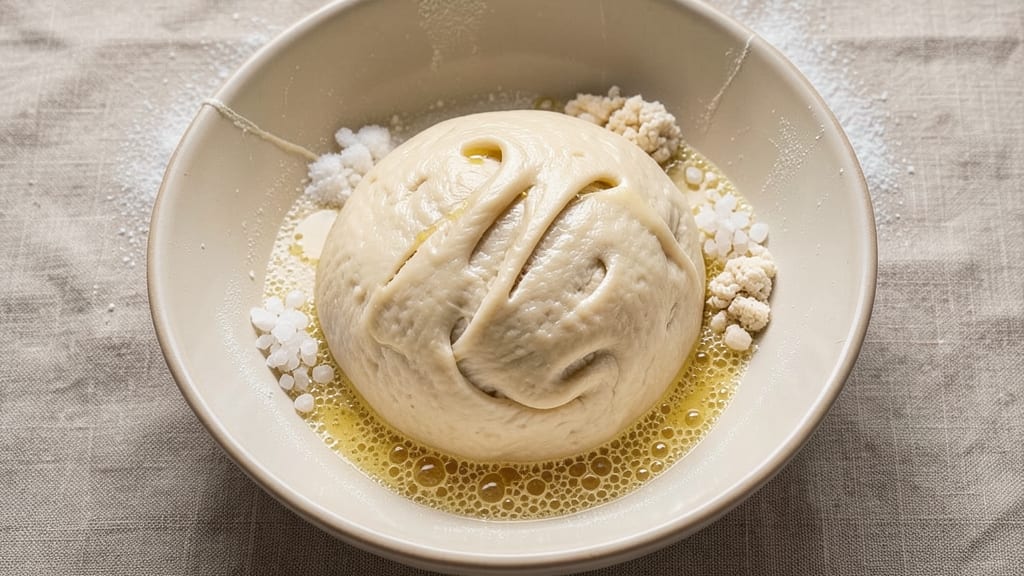
This authentic Italian bread dough recipe delivers the crusty perfection of artisanal bakery loaves using a zero-knead rise method that preserves traditional flavor while simplifying the process.
The secret lies in precise hydration and long fermentation, which develop gluten naturally without overworking the dough—just as Italian nonnas have done for generations.
What sets this dough apart is its versatility: shape it into rustic ciabatta with airy holes or dense pane casareccio with a crispy crust, all from the same base.
The autolyse technique (mixing flour and water before adding yeast) creates a lighter, more extensible dough that yields better oven spring and texture. No food processor or fancy equipment is needed—just time and patience.
By the final bake, you'll achieve that signature golden-brown crust with an irresistibly crisp exterior and tender, airy crumb inside. The aroma alone will transport you to a Roman trattoria, while the texture delivers the satisfying chew and shatter of authentic Italian bread.
This is the foundation for bread that rivals professional bakery quality.
The beauty of this method is its adaptability—use it for sandwich loaves, focaccia, or even pizza dough. Once mastered, you'll never buy store-bought bread again. Let's begin with the essential ingredients that make this dough truly authentic.
Ingredients for authentic italian bread dough
Nine essential ingredients transform into artisanal Italian bread with professional-quality crust and crumb.
| Ingredient | Amount | Notes |
|---|---|---|
| Type 00 Flour 🌾 | 5 cups | Italian flour, protein 10-12% |
| Active Dry Yeast 🍞 | ¼ tsp | Fresh yeast preferred if available |
| Granulated Sugar 🍚 | ½ tsp | Enhances yeast activation |
| Diamond Crystal Kosher Salt 🧂 | 2 tsp | Adjusts to taste |
| Extra-Virgin Olive Oil 🫒 | 1 ½ tbsp | High-quality, fruity variety |
| Warm Water 💧 | 3 cups | 105-110°F for yeast activation |
| Cornmeal 🌽 | ½ cup | For dusting work surface |
| Semolina Flour 🌾 | ¼ cup | For dusting baking sheet |
| Coarse Sea Salt 🧂 | 1 tbsp | For final crust sprinkle |
The Type 00 flour is non-negotiable—its low protein content (10-12%) creates the delicate, airy crumb characteristic of Italian bread. Caputo or Molino Grassi are the gold standards, but King Arthur Italian 00 works well for home bakers. If you can't find Type 00, all-purpose flour is a serviceable substitute, though the texture will be slightly denser. Yeast quality matters: Saf-Instant is reliable, but fresh yeast from a local bakery supply store yields superior results. The warm water should be between 105-110°F—too hot kills the yeast, too cool slows activation. For the olive oil, California Avocado Ranch or Colavita deliver the fruity notes that elevate the dough's flavor profile.
No Type 00 flour? King Arthur all-purpose or Bob's Red Mill bread flour (with 11-12% protein) are acceptable alternatives, though the texture will differ slightly. Fresh yeast unavailable? Active dry yeast works at the same quantity, but ensure it's within its expiration date. The sugar isn't for sweetness—it primes the yeast for faster fermentation. For the coarse sea salt, Maldon or Jacobsen brands create the perfect crust texture. If you're short on time, instant yeast can be mixed directly with the flour, eliminating the need for proofing. The cornmeal and semolina are traditional dustings that prevent sticking—semolina adds that signature rustic texture to the crust.
Fresh yeast requires refrigeration and must be used within 3 months of purchase. The dough can be refrigerated for up to 48 hours before shaping and baking, which enhances flavor development. For long-term storage, freeze shaped dough (unbaked) on a floured tray for 3 months—thaw overnight in the fridge before baking. The olive oil should be stored in a cool, dark place to preserve its flavor. Once mixed, the dough is best used immediately, but the autolyse stage (resting before yeast addition) can be extended to 18 hours in the fridge for deeper flavor. Always bake within 24 hours of final mixing for optimal texture.
Why You'll Love This Recipe
- No-Knead Magic: I swear by this dough—just mix, wait, and bake. The Type 00 flour gives it that signature lightness without a single punch or stretch.
- Olive Oil Gold: That rich EVOO finish? It’s the secret. A single brush before baking turns plain bread into something that tastes like a Tuscan sunset.
- Weeknight Wonder: Make it Monday, use it Friday. This dough keeps beautifully in the fridge for days—perfect for sandwiches, toast, or even garlic knots.
- Budget-Friendly Staple: Five ingredients, endless possibilities. A single batch feeds my whole family, and the leftovers? Crusty perfection for days.
Step-by-step instructions for authentic Italian bread dough
Master this zero-knead technique for bread with an open crumb and crispy crust.
Activate the Yeast with Warm Water and Sugar
In a large mixing bowl, combine the 3 cups warm water (between 105-110°F) with the 0.5 tsp granulated sugar and 0.25 tsp active dry yeast. Let it sit for 5-10 minutes until the mixture becomes frothy and bubbles form on the surface. This confirms the yeast is active and ready to work.
I always test the water temperature with my finger—it should feel pleasantly warm but not hot. If the yeast doesn't activate, your bread will lack rise. For best results, use fresh yeast or proof it in warm water for 5 minutes before adding to the dough.
Mix the Dough with Type 00 Flour and Olive Oil
Add the 5 cups type 00 flour and 2 tsp diamond crystal kosher salt to the yeast mixture. Stir with a wooden spoon until a shaggy dough forms, then drizzle in the 1.5 tbsp extra-virgin olive oil. Mix vigorously for 2-3 minutes until the dough comes together and pulls away from the sides of the bowl.
The dough should be slightly sticky but manageable. If it's too wet, add 1 tablespoon of flour at a time until it reaches the right consistency. The olive oil is crucial here—it develops flavor during the long fermentation and creates a tender crumb. Avoid overmixing to prevent gluten development that would make the bread too tough.
Let the Dough Rest for Autolyse (Critical Step)
Cover the bowl with a damp kitchen towel and let the dough rest at room temperature for 1 hour. This autolyse step allows the flour to fully hydrate and the gluten to begin relaxing, making the dough easier to handle later. During this time, the dough will look shaggy but will become more cohesive.
I like to set a timer and check the dough after 30 minutes. It should have doubled in volume and feel slightly springy when pressed gently. This resting period is what makes the zero-knead method work—it develops flavor and texture without requiring extensive kneading.
Shape and Second Rise (The Secret to Open Crumb)
After the autolyse, gently stretch and fold the dough 2-3 times in the bowl, turning it 90 degrees each time. This helps strengthen the gluten without overworking it. Cover again and let it rise at room temperature for 12-16 hours—this slow fermentation develops deep flavor and an open crumb structure.
For best results, I place the dough in a warm spot (like near the oven with the light on) to maintain a consistent temperature. The dough should rise until it's about 50-75% larger than its original size. If it rises too quickly, it may collapse during baking, so monitor it closely during the last few hours.
Shape and Final Proof Before Baking
Lightly dust a work surface with 0.5 cup cornmeal and turn out the dough. Gently shape it into a round loaf by pulling the edges toward the center. Place it seam-side up on a baking sheet dusted with 0.25 cup semolina flour, then cover and let it proof for 1-2 hours until it's puffy and nearly doubled in size.
Before baking, sprinkle the dough generously with 1 tbsp coarse sea salt for that authentic Italian flavor and crispy crust. The semolina flour creates a barrier that prevents the dough from sticking to the baking sheet, while the salt enhances the Maillard reaction for maximum browning.
Pro Tips For Making Authentic Italian Bread Dough
- Use Room-Temp Flour: I learned this the hard way—cold Type 00 flour makes gluten development sluggish. Let your flour sit out for at least 2 hours before mixing, or even better, warm it slightly (not hot) by placing the bag in a 100°F oven for 10 minutes. The dough will come together faster and rise more predictably.
- Salt Before Yeast: Diamond Crystal kosher salt is less concentrated than table salt, but timing matters: dissolve it in the water before activating the yeast. This prevents over-salting the yeast, which can kill it prematurely. (Yes, even if you’re impatient like me—wait for the yeast to foam fully first.)
- Stretch, Don’t Fold: When shaping, resist the urge to fold the dough like a letter. Instead, gently stretch the surface toward you while keeping the bottom anchored—this builds tension without tearing. I was skeptical until I tried it; the crust now splits cleanly instead of collapsing.
- Olive Oil Matters: Skip the cheap stuff. Use extra-virgin olive oil for that authentic Italian flavor and better browning. Add it last during kneading—just 1 tablespoon—to coat the dough evenly. (Does it look weird? Yes. Does it work? Every single time.)
Best sauces and condiments for this authentic italian bread dough
Classic Olive Oil
Drizzle 1-2 tablespoons of high-quality extra-virgin olive oil over freshly baked bread while still warm. I recommend California Avocado Ranch or Colavita for their fruity, peppery notes that complement the crust's crispness.
Brush it lightly over the top or serve it in a small bowl for dipping. This simple step adds moisture and enhances the bread's natural flavor without overpowering it. 🫒
Garlic Confit
Infuse 4-5 cloves of garlic in ½ cup olive oil with 1 tsp dried oregano and ½ tsp red pepper flakes for 30 minutes at 200°F. The slow-cooked garlic becomes tender and imparts its rich flavor into the oil.
Spoon this aromatic oil over warm bread slices or use it as a dipping sauce for rustic bread pieces. This Italian classic transforms simple bread into a flavorful centerpiece. 🧄
Rosemary-Infused Oil
Combine ½ cup olive oil with 2 sprigs fresh rosemary and 1 tsp lemon zest in a small jar. Let it infuse for at least 2 hours (or overnight in the fridge) before using.
Drizzle this fragrant oil over warm bread or mix it into the dough before shaping for an herbal twist. The piney aroma of rosemary pairs beautifully with the bread's crusty exterior and soft interior. ✨
Balsamic Glaze
Simmer ¼ cup balsamic vinegar in a small saucepan until reduced by half, then finish with 1 tsp honey and a pinch of flaky sea salt. Brush this glossy glaze over warm bread slices or drizzle it over a platter of bread pieces.
The tangy-sweet balance cuts through the bread's richness, creating a perfect contrast. For extra decadence, add a sprinkle of crushed pistachios on top. 🍷
Whole Grain Mustard
Mix 2 tablespoons whole grain mustard with 1 tablespoon olive oil and a splash of lemon juice to create a vibrant spread. This condiment adds a tangy kick that pairs wonderfully with the bread's neutral flavor.
Spread it on warm slices or use it as a dip for bread pieces. The mustard's texture and flavor provide a delightful contrast to the bread's crispy crust. 🌶️
Tomato Basil Jam
Blend 1 cup sun-dried tomatoes, ½ cup fresh basil, 2 tbsp olive oil, 1 tsp balsamic vinegar, and a pinch of salt until smooth. Simmer the mixture for 10 minutes to thicken into a jam-like consistency.
Spread this rich, herby jam on warm bread slices or use it as a topping for focaccia. The sweet-tangy flavor elevates the bread to restaurant-quality levels. 🍅
Nutrition facts
Frequently asked questions
Why is Type 00 flour essential for authentic Italian bread?
Type 00 flour's low protein content (10-12%) creates the signature delicate crumb and crisp crust of Italian bread. Its fine texture also improves oven spring. For best results, use brands like Caputo or Molino Grassi—substitutes like all-purpose flour will yield a denser loaf.
Can I make this dough without kneading?
Yes! The autolyse method (resting flour and water before adding yeast) develops gluten naturally. After mixing, simply stretch and fold the dough 2-3 times during the 12-16 hour rise. This creates the same structure as kneading without the effort.
What's the best way to test if my dough is ready to bake?
Press gently on the dough—if it springs back slowly (not immediately), it's ready. For visual confirmation, look for 50-75% volume increase during the final proof. A well-proofed loaf should have a smooth, slightly domed top.
How can I fix dough that rises too quickly and collapses?
This happens when yeast is too active. For next time, use fresh yeast and keep the dough in a cooler environment (75°F or below). If it collapses, reshape and let it proof again for 1-2 hours before baking. The crust will still develop great flavor!
Can I use this dough for pizza?
Shape the dough into balls, let them proof for 1-2 hours, then stretch by hand. The high hydration creates a chewy, airy crust perfect for pizza. For extra authenticity, add 1 extra tablespoon of olive oil during mixing.