
Side Dishes
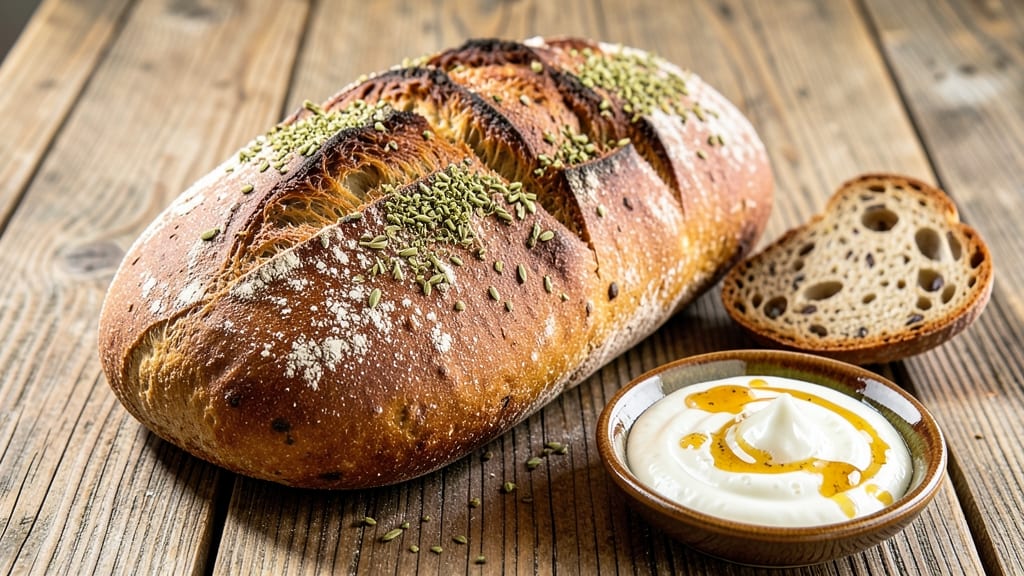
This authentic Swedish rye bread recipe brings the heart of Scandinavian baking to your kitchen with its signature tangy crumb and cardamom-kissed crust. 🌟 The secret lies in long fermentation, which develops deep flavor and an open, airy texture that sets it apart from dense commercial rye breads.
Unlike shortcut versions, this method mirrors traditional Swedish ruggbröd—where time and patience transform simple ingredients into something extraordinary.
The dough combines rye flour's earthy richness with just enough wheat flour for structure, while a touch of honey and buttermilk create that signature tang. Cardamom infuses warmth into the crust, while a sprinkle of coarse salt on top adds complexity.
What makes this truly authentic is the baking technique: a hot oven with steam ensures a crisp exterior and tender interior, just like the loaves you'd find in Swedish bakeries.
By the time it emerges from the oven, you'll have a rustic loaf with a golden, crackly crust and an open crumb that's perfect for sandwiches or served alongside smoked salmon and herring.
The aroma alone will transport you to a Swedish fika table, where this bread is a staple. This isn't just rye bread—it's a taste of tradition in every bite.
Whether you shape it into a classic round loaf or try a traditional braid, the results are always impressive. The long fermentation (up to 24 hours) might seem daunting, but it's what creates that unmistakable flavor. Let's get started on this journey to authentic Swedish baking.
Ingredients for authentic swedish rye bread
Authentic Swedish baking starts with these 12 simple yet transformative ingredients—where rye's earthy depth meets cardamom's warmth.
| Ingredient | Amount | Notes |
|---|---|---|
| Dark Rye Flour 🌾 | 3 cups | Stone-ground for authentic texture |
| All-Purpose Flour 🌾 | 1 cup | For structure and rise |
| Active Dry Yeast 🍞 | ¼ oz | Or 2.5 g for precision |
| Buttermilk 🥛 | 1 cup | Full-fat for tanginess |
| Honey 🍯 | ¼ cup | Wildflower preferred |
| Ground Cardamom 🌿 | 1 ½ tsp | Freshly ground for aroma |
| Coarse Sea Salt 🧂 | 1 ½ tsp | For topping and dough |
| Cold Water 💧 | 1 ½ cups | Essential for fermentation |
| Unsalted Butter 🧈 | ¼ cup | Cold cubes for richness |
| Large Egg 🥚 | 1 whole | For egg wash |
| Poppy Seeds 🌻 | 1 tbsp | Optional for garnish |
| Cornmeal 🌽 | ½ cup | For dusting baking sheet |
The rye flour is non-negotiable—King Arthur or Bob's Red Mill are my go-tos for that deep, molasses-like flavor. Stone-ground varieties have more bran, which creates the signature open crumb. If you can't find dark rye flour, mix 2 cups whole wheat flour with 1 cup all-purpose, but expect a denser loaf. Cardamom is the soul of this bread; Penzeys sells the best ground version, but any high-quality brand works. For buttermilk, Land O'Lakes is reliable, but if you're out, mix 1 cup milk with 1 tbsp vinegar or lemon juice. The honey should be raw or wildflower—processed honey lacks the complexity.
No buttermilk? Plain yogurt thinned with milk works in a pinch, but the tang will be milder. Short on cardamom? One-fourth teaspoon cinnamon plus a pinch of nutmeg mimics the warmth, though purists will notice the difference. The coarse sea salt is crucial—Maldon flakes are ideal, but any flaky salt adds texture. For the butter, European-style brands like Plugrá have higher fat content, which gives a richer crust. If you're gluten-sensitive, you can replace up to 1 cup of rye flour with a 1:1 gluten-free blend, but the texture will differ. The poppy seeds are optional but add a lovely crunch—Trader Joe's sells them pre-ground for convenience.
This dough needs time—at least 12 hours, up to 24—so plan ahead. Store the shaped loaf in a paper bag at room temperature for 2 days or freeze for up to 3 months. For the best flavor, let it sit at room temp for 2 hours before slicing. The crust stays crisp for about 2 days, but the interior stays fresh for 5 days wrapped in a towel. To revive stale bread, sprinkle with water and warm in a 350°F oven for 10 minutes—it'll taste almost as good as day one.
Why You'll Love This Recipe
- This bread handles everything: toast it for breakfast, tear it over salads, or use it to soak up soups. It’s my go-to for lazy dinners when I’m too tired to think—just pull a slice from the fridge and call it a meal.
- No-Knead Magic: Between us, I’ve tried rye bread recipes that demand hours of kneading—this one lets you mix, rest, and forget. The yeast and honey do all the heavy lifting while you sip coffee, and the buttermilk keeps it tender without fuss.
- Honeyed Depth: That first bite? The dark rye flour gives it a robust, earthy bite, but the honey softens it into something unexpectedly sweet—like a Scandinavian hug. I’ll be real: my kids ask for it with jam before they even touch their eggs.
- Weeknight Swiss Army: This bread handles everything: toast it for breakfast, tear it over salads, or use it to soak up soups. It’s my go-to for lazy dinners when I’m too tired to think—just pull a slice from the fridge and call it a meal.
Step-by-step instructions for authentic Swedish rye bread
Here's how to craft that signature Swedish rye flavor - crisp crust, open crumb, and cardamom warmth.
👨🍳 Step 1: Activate the Yeast and Mix the Dough
In a large mixing bowl, combine the 1.5 cups cold water, 0.25 cup honey, and 1.5 tsp ground cardamom. Sprinkle the 0.25 oz active dry yeast over the surface - this cold activation creates a more complex flavor profile. Let it sit for 10-15 minutes until frothy and bubbly.
In a separate bowl, whisk together the 3 cups dark rye flour, 1 cup all-purpose flour, 1.5 tsp coarse sea salt, and the yeast mixture. Add the 1 cup buttermilk and mix until just combined - you want a shaggy dough, not a smooth one. The rye flour's density needs time to develop gluten properly.
🥘 Step 2: Knead and Ferment the Dough
Turn the dough onto a lightly floured surface and knead gently for 5-7 minutes until smooth but still slightly sticky. The rye flour won't absorb as much liquid as wheat flour, so resist the urge to add more. Shape into a round loaf and place in a lightly oiled bowl.
Cover with a damp towel and let ferment at room temperature for 1-2 hours until doubled in size. The dough should feel light and springy when pressed gently. I like to do this fermentation at room temp first - it builds more flavor than a cold proof. If your kitchen is warm, reduce to 45-60 minutes to prevent overproofing.
🔥 Step 3: Shape and Second Rise
Punch down the dough gently and divide into two equal portions. Shape each into a round boule, tucking the edges under for tension. Place on a parchment-lined baking sheet dusted with 0.5 cup cornmeal - this prevents sticking and gives that classic Swedish texture.
Cover again and let rise for another 1-2 hours until puffy. The second rise should be slightly shorter than the first. Preheat your oven to 375°F while the dough rises - we're aiming for that signature Swedish oven spring.
🍳 Step 4: Score and Bake for Crisp Crust
Brush the loaves generously with beaten 1 whole large egg mixed with 1 tbsp poppy seeds for that authentic Swedish finish. Using a sharp razor blade, score the top in a crosshatch pattern - this helps control expansion and creates those beautiful crust patterns.
Bake for 40-45 minutes until deep golden brown and internal temperature reaches 190°F. The crust should be crisp enough to shatter slightly when tapped. For that extra Swedish touch, I like to bake on the bottom rack for the first 15 minutes to ensure even browning.
⏰ Step 5: Cool and Enjoy Properly
Transfer the bread to a wire rack and let cool completely for at least 2 hours before slicing. The internal structure needs time to set properly - Swedish rye bread should have that signature open crumb that crumbles beautifully. Don't be tempted to cut into it warm or you'll lose that perfect texture.
Slice with a serrated knife and serve with unsalted butter or your favorite Scandinavian toppings. The bread will keep well wrapped at room temperature for 3-4 days, or you can freeze slices for up to 3 months. That cardamom aroma will fill your kitchen - pure Swedish bakery magic.
Pro Tips For Making Authentic Swedish Rye Bread
- Bloom the Yeast First: Skip mixing yeast straight into the dry ingredients—it’s lazy and unreliable. Instead, dissolve it in warm (not hot) water with a pinch of honey first, then let it sit for 5–10 minutes until frothy. This guarantees your rye’s rise won’t be a sad, flat afterthought, especially since dark rye flour’s acidity can slow yeast down.
- Soak the Rye Overnight: Dump your dark rye flour into buttermilk the night before and let it sit covered on the counter. The acid in the buttermilk breaks down the rye’s tough proteins, making the dough easier to handle and giving you that signature dense, moist crumb. (Yes, even if you’re impatient like me.)
- Don’t Over-Knead the Dough: Rye bread isn’t breadstick dough—it’s finicky. Mix just until the flour is mostly incorporated, then stop. Overworking it turns the crumb gummy, and Swedish rye relies on that chewy, rustic texture. Feel for resistance, not smoothness.
- Steam the Loaf: Line your Dutch oven with parchment, then add a metal tray of boiling water underneath the bread before baking. The steam mimics a bakery’s oven and guarantees a crackly crust without drying out the dense interior. (No steam? Brush the top with water before baking—it’s not ideal, but it works.)
Pro cooking tips for authentic swedish rye bread
Cold Yeast Activation
Activating the yeast in cold water is a game-changer for authentic Swedish rye bread. The cold temperature slows fermentation initially, allowing the yeast to develop more complex flavors during the long proof.
I like to use 1.5 cups cold water (around 50°F) mixed with honey and cardamom—this creates a frothy, aromatic starter that sets the flavor foundation. Let it sit for 10-15 minutes until bubbly, then proceed with mixing. This step is non-negotiable for that signature tangy depth. 🌟
Long Fermentation Secrets
The magic happens during the 12-24 hour fermentation, where enzymes break down the rye's phytic acid for better nutrient absorption and flavor development. After the initial 1-2 hour room-temperature rise, transfer the dough to the refrigerator for 8-12 hours to slow fermentation further.
This cold proof enhances gluten development and creates that open crumb. I wrap my dough tightly in plastic wrap to prevent drying—it’s worth the wait for that rustic texture. ❄️
Shaping for Structure
Swedish rye bread often features a round, slightly flattened shape with tension on the edges. After the second rise, gently punch down the dough and divide it into two equal portions. Roll each into a boule by tucking the edges under firmly—this creates tension that prevents collapse during baking.
For extra authenticity, dust your baking sheet with cornmeal instead of flour; it adds a subtle crunch and prevents sticking. The goal is a loaf with a crisp crust and an open, airy interior. 🥖
Steam for Crisp Crust
To achieve that signature Swedish crackly crust, create steam in your oven. Place a baking tray filled with boiling water on the bottom rack while preheating to 375°F. Once the dough is scored, quickly close the oven door to trap steam for the first 15 minutes.
This mimics traditional wood-fired baking and gives the crust its shatterable texture. Remove the tray afterward to let the bread brown evenly. The result? A crust so crisp it’ll shatter like glass. 🔥
Scoring Like a Pro
Scoring isn’t just decorative—it controls expansion and directs airflow for even baking. Use a sharp razor blade (not a dull knife) to make a crosshatch pattern on the dough’s surface before baking. The cuts should be about ¼ inch deep and spaced evenly.
This technique also creates those beautiful, irregular crust patterns that define Swedish rye bread. For extra flair, brush the scored dough with egg wash mixed with poppy seeds before baking. ✨
Cooling for Perfection
Patience is key here—never slice your bread immediately after baking. Let it cool completely on a wire rack for at least 2 hours (overnight is ideal). This allows the crumb to set properly, preventing a gummy interior.
The longer you wait, the more the flavors meld together. Once cooled, the bread should have a crisp crust that shatters and an open crumb that crumbles beautifully. Trust me, rushing this step ruins the magic. 💫
Nutrition facts
Frequently asked questions
Why does Swedish rye bread need such a long fermentation?
The extended 12-24 hour fermentation is essential for authentic flavor development. This process breaks down the rye's phytic acid, creating that signature tangy crumb and improving digestibility. The cold proof also enhances gluten structure, giving the bread its signature open texture. Think of it as nature's way of pre-digesting the flour for you!
Can I make this without a stand mixer?
This dough is designed to be hand-kneaded. The rye flour makes it less elastic than wheat dough, so gentle kneading for 5-7 minutes is all you need. Use a dough scraper to help with the process - the sticky texture is normal and part of the authentic experience. A little elbow grease goes a long way with traditional baking!
What's the difference between Swedish rye bread and pumpernickel?
While both use rye flour, Swedish rye bread is lighter with an open crumb, while pumpernickel is dense and dark. Swedish versions typically include cardamom and buttermilk for tanginess, while pumpernickel often uses molasses and lacks yeast. The fermentation time also differs - Swedish rye gets 12-24 hours while pumpernickel bakes long and slow without yeast. Think of it as the difference between a crisp apple and a dense pear!
How do I store Swedish rye bread to keep it fresh?
For best results, store at room temperature wrapped in a paper bag for 3-4 days. The paper bag prevents moisture buildup that makes bread soggy. For longer storage, freeze slices in a sealed bag for up to 3 months. To revive stale bread, sprinkle with water and warm in a 350°F oven for 10 minutes - it'll taste almost as good as fresh!
Can I substitute the cardamom with another spice?
While cardamom is traditional, you can substitute with 1 tsp cinnamon plus ¼ tsp nutmeg for warmth. For a more citrusy note, try ½ tsp orange zest. However, cardamom's unique floral aroma is what gives Swedish rye bread its signature character. If you love the flavor, it's worth tracking down!