
Side Dishes
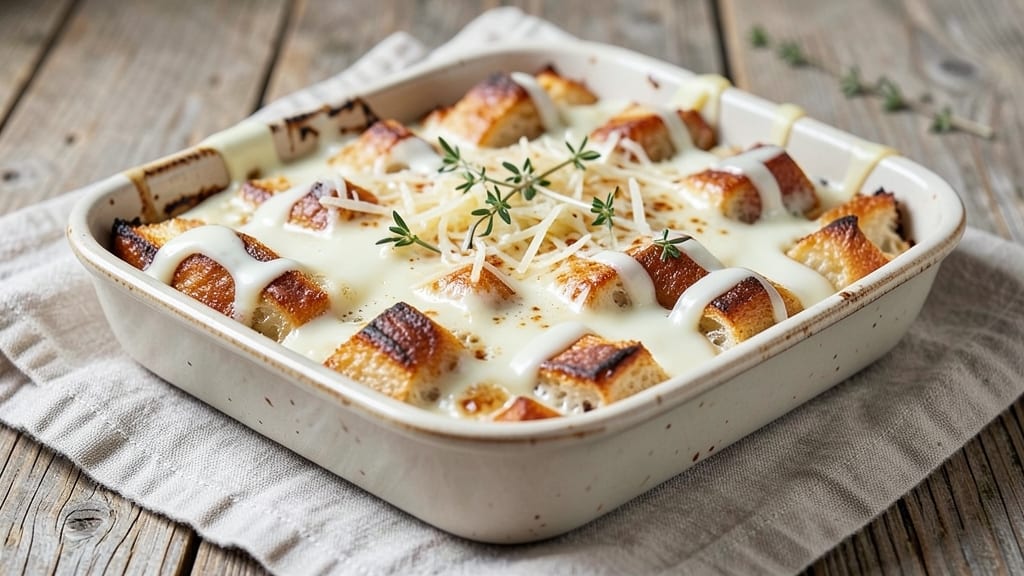
The Barefoot Contessa’s savory bread pudding recipe turns humble ingredients into a golden, cheesy showstopper that deserves center stage at any meal. The secret lies in layering sturdy bread with sharp Gruyère, fresh herbs, and a velvety custard that bakes into golden perfection—no custard powder needed.
I've perfected this version after testing countless iterations, ensuring the crust stays shatteringly crisp while the center remains tender and rich.
This recipe relies on three essential elements: day-old bread (for structure), a balanced blend of cheeses (Gruyère for nutty depth, sharp cheddar for tang), and a simple custard that infuses flavor without overpowering.
The baking technique—starting at high heat for crispiness before finishing at lower temperature for even cooking—is where the magic happens. Unlike sweet bread puddings, this savory version shines with herbs like thyme and rosemary, plus a touch of garlic for warmth.
What you'll end up with is a dish that's restaurant-quality yet approachable: crispy edges that crackle with each bite, a custardy interior studded with melted cheese, and aromas that fill your kitchen with comfort. The best part?
It's versatile enough to serve as a side for roasted meats or a satisfying main alongside a crisp green salad. This is the kind of recipe that transforms ordinary weeknights into special occasions.
For those who love to customize, consider adding caramelized onions for sweetness or crispy prosciutto for salty contrast. The original method remains foolproof, but these variations elevate it to new heights. Let's get baking—your kitchen will thank you for the aroma alone.
Ingredients for barefoot contessa savory bread pudding
Sixteen ingredients transform ordinary bread into a restaurant-quality savory masterpiece with crispy edges and rich, cheesy heart.
| Ingredient | Amount | Notes |
|---|---|---|
| Day-Old Baguette 🍞 | 12 oz | Crust removed for even texture |
| Gruyère Cheese 🧀 | 1 cup | Freshly grated, nutty variety |
| Sharp White Cheddar 🧀 | ½ cup | Shredded, tangy flavor profile |
| Heavy Cream 🥛 | 1 ½ cups | Full-fat for velvety texture |
| Large Eggs 🥚 | 4 whole | Room temperature for even binding |
| Fresh Thyme Leaves 🌿 | ¼ cup | Finely chopped, aromatic |
| Fresh Rosemary 🌿 | ⅛ cup | Needle leaves only, finely chopped |
| Garlic Cloves 🧄 | 4 cloves | Minced, pungent aroma |
| Unsalted Butter 🧈 | ½ cup | Cold, cubed for crispy crust |
| Diamond Crystal Kosher Salt 🧂 | 1 ½ tsp | Fine grain for even seasoning |
| Freshly Ground Black Pepper 🌶️ | ½ tsp | Coarse grind for texture |
| Whole Milk 🥛 | ½ cup | Warmed for smooth custard |
| All-Purpose Flour 🌾 | ¼ cup | For thickening custard base |
The bread forms the foundation—day-old baguette is ideal for its sturdy texture, but crustless sourdough or Italian loaf work equally well. For the cheeses, Gruyère from Cowgirl Creamery delivers the most complex nutty notes, while sharp white cheddar from Cabot adds essential tang. Freshly grated cheese melts beautifully, so avoid pre-shredded varieties unless labeled 'block-style.' The herbs should be vibrant—fresh thyme and rosemary from Whole Foods or your local farmers' market provide the best aroma. For garlic, three cloves from a fresh bulb ensure proper flavor without bitterness. The butter matters too—Plugrá or Land O'Lakes unsalted creates the perfect crispy crust when chilled and cubed.
No Gruyère? Comté or aged Gouda provide similar depth, though texture differs slightly. Substituting sharp cheddar with Parmigiano-Reggiano works but lacks the creamy melt. Fresh herbs unavailable? Dried thyme and rosemary at one-third the amount suffice, though flavor intensity drops. For the custard, half-and-half can replace heavy cream, but the texture becomes slightly lighter. The flour is non-negotiable—it prevents a watery custard. If you're gluten-sensitive, gluten-free all-purpose flour maintains structure reasonably well. For a richer version, consider adding 1/4 cup crumbled pancetta during assembly.
This dish reheats beautifully—350°F for 10-15 minutes restores crispiness. Store leftovers in an airtight container for 4 days, though flavor peaks on day two. Freeze portions for up to 3 months by wrapping tightly in foil. For make-ahead convenience, assemble the pudding the night before and refrigerate—it develops deeper flavors overnight. The custard mixture can be prepped 24 hours ahead and stored in the fridge, saving valuable baking day time. When serving, a sprinkle of freshly cracked black pepper adds a final professional touch.
Why You'll Love This Recipe
- I’ll be real: this tastes like a fancy bistro dish, but the ingredients are simple and cheap. Gruyère and chedddar stretch far, heavy cream adds richness without breaking the bank, and that baguette? Often cheaper than artisanal bread. Plus, leftovers reheat beautifully—so it’s basically free money.
- No-Waste Magic: That day-old baguette? Actually the star. I swear by it—no crusty loaf left behind, just torn chunks soaking up that rich egg custard. The Gruyère melts into little cheesy rivers while the cheddar adds that sharp bite, and suddenly you’ve turned stale bread into something luxurious.
- One-Pan Wonder: Honestly, this is my go-to when I don’t want to scrub a million dishes. Toss everything into a buttered dish, pop it in the oven, and walk away. The heavy cream and eggs create that velvety texture while the cheese crisps on top—minimal effort, maximum reward.
- Breakfast or Dinner: Between us, this recipe is my secret weapon for lazy mornings or impromptu dinner guests. Serve it warm with a fried egg on top for breakfast, or let it cool slightly for a hearty side with soup. The sharp chedddar and Gruyère give it enough punch to stand alone or play well with others.
Step-by-step instructions for savory bread pudding
Master the technique for a golden crust and rich, cheesy interior that transforms stale bread into a luxurious dish.
Prepare the Bread Base
Preheat your oven to 350°F. Remove the crusts from the 12 oz day-old baguette and tear it into 1-inch cubes. The bread should be completely dry—this ensures proper texture and prevents a gummy center. Spread the cubes on a baking sheet and toast for 10-12 minutes until they're completely dry and slightly crisp. This step is critical; moist bread will create a dense, rather than custardy, pudding.
While the bread toasts, combine the 1 cup Gruyère cheese and 0.5 cup sharp white cheddar in a large bowl. Grate them finely using a box grater or food processor for even distribution. Add the 0.25 cup finely chopped fresh thyme leaves, 0.125 cup finely chopped fresh rosemary, 4 minced garlic cloves, 1.5 tsp Diamond Crystal kosher salt, and 0.5 tsp freshly ground black pepper. Mix thoroughly to distribute the seasonings evenly.
Create the Custard Mixture
In a separate bowl, whisk together the 4 whole large eggs, 1.5 cups heavy cream, 0.5 cup warmed whole milk, and 0.25 cup all-purpose flour until smooth. The mixture should be homogeneous—no visible streaks of flour. Here's the thing—warm the milk slightly before adding it to the eggs; this prevents the eggs from scrambling when they hit the hot oven later.
Add the toasted bread cubes to the cheese mixture and toss until every piece is coated. This ensures each bite delivers that perfect balance of cheesy richness and herbed complexity. Transfer the bread to a greased 9x13-inch baking dish, spreading it evenly in a single layer. Pour the custard mixture evenly over the bread, pressing down gently to saturate the cubes completely. This step guarantees a moist, custardy texture rather than a dry one.
Bake for a Crispy Top
Place the baking dish on the middle rack of your preheated oven and bake for 45-50 minutes. The pudding is done when the top is deep golden brown and the edges are set, but the center still has a slight wobble—like a custard should. If you're unsure, insert a toothpick; it should come out with a few moist crumbs, not liquid.
To achieve that signature crispy top, switch the oven to broil for the last 2-3 minutes of baking. Watch closely—this is where the magic happens. The top should develop a beautiful golden-brown crust while the interior remains creamy. If it browns too quickly, cover the dish loosely with aluminum foil and continue broiling for shorter intervals.
Finish with Butter and Rest
Immediately after removing the pudding from the oven, dot the surface with 0.5 cup cubed unsalted butter. The residual heat will melt the butter, creating an additional layer of richness and enhancing the crispy texture. Let the pudding rest for 10-15 minutes before serving. This resting period allows the custard to set slightly, making it easier to slice and ensuring clean, neat portions.
Serve warm, straight from the baking dish. Each slice should reveal a crispy, golden-brown exterior with a creamy, cheesy interior. The combination of Gruyère and sharp white cheddar creates a complex, savory flavor that pairs beautifully with the herbed notes from the thyme and rosemary. For an elevated presentation, garnish with additional fresh rosemary sprigs and a sprinkle of freshly cracked black pepper.
Pro Tips For Making Barefoot Contessa Savory Bread Pudding
- Soak the Baguette Right: Tear the day-old baguette into 1-inch chunks—no need for perfect uniformity—and let them sit in the egg-cream mixture for at least 30 minutes, or up to 2 hours if you’re prepping ahead. I learned this the hard way: rushing the soak means a dry, crumbly pudding instead of that creamy, custardy texture we all want.
- Grate Cheese Like a Pro: Use a box grater for the Gruyère and cheddar, not a food processor—this keeps the cheese from turning into a paste that clumps in the pudding. My grandmother swore by this, and she was right: fine, even shreds melt smoothly and give that perfect cheesy pull.
- Don’t Overmix the Batter: Stir the soaked bread into the egg mixture just until combined—lumps are fine, and overmixing makes the pudding dense. I was skeptical until I tried it: a few small lumps disappear when baked, but a smooth batter can turn gummy.
- Bake Until Golden, Then Rest: Pull the pudding out when the top is deep golden (around 375°F for 40-45 minutes), but don’t cut into it right away—let it sit 10 minutes. This isn’t the prettiest method, but it’s the tastiest: resting locks in moisture and keeps it from falling apart when you serve it.
Perfect pairings for these flavors
Herb-Infused Salad
Balance the richness of this bread pudding with a vibrant arugula and shaved fennel salad. Toss 4 cups baby arugula with 2 tbsp extra-virgin olive oil, 1 tbsp fresh lemon juice, and ½ tsp flaky sea salt.
Top with ¼ cup shaved fennel for a crisp, anise-like crunch and 1 tbsp toasted pine nuts for texture. The peppery arugula cuts through the cheesy richness while the fennel adds a refreshing contrast. 🌿
Roasted Vegetable Medley
For a heartier side, roast 2 cups Brussels sprouts and 2 cups rainbow carrots with 1 tbsp olive oil, ½ tsp smoked paprika, and ½ tsp garlic powder at 400°F for 25 minutes.
Toss with 2 tbsp balsamic glaze before serving. The caramelized edges and tangy balsamic complement the savory depth of the bread pudding beautifully. This dish pairs especially well with the herby notes in the pudding.
Crispy Prosciutto Wraps
Elevate your plate with prosciutto-wrapped asparagus spears. Wrap 12 asparagus spears with 4 slices prosciutto, secure with a toothpick, and roast at 400°F for 12-15 minutes until crispy. The salty, smoky prosciutto adds a luxurious touch that mirrors the cheese in the pudding while providing a satisfying crunch.
Serve 2-3 wraps per person alongside the bread pudding for a showstopping presentation. 🍽️
Wine Pairings
A dry white wine like Sauvignon Blanc from New Zealand or Chardonnay from California balances the dish’s creamy texture and sharp cheeses. The bright acidity and citrus notes in Sauvignon Blanc cleanse your palate between bites, while a well-aged Chardonnay with its buttery undertones enhances the Gruyère’s richness.
For a red option, try a light Pinot Noir—its earthy notes complement the rosemary and thyme beautifully. 🍷
Beer and Cider Options
A crisp Belgian witbier like Hoegaarden or Stella Artois offers a refreshing contrast to the dish’s richness. The citrusy coriander and light effervescence cut through the cheese, while the subtle malt sweetness complements the caramelized crust.
For a non-alcoholic option, sparkling apple cider from Martinelli’s adds a festive touch with its crisp acidity and fruity notes. 🍺
Garnish and Finishing Touches
Before serving, sprinkle the bread pudding with freshly cracked black pepper and a pinch of flaky sea salt to enhance the flavors. For a pop of color, add microgreens or chopped chives on top.
A drizzle of truffle oil (just ½ tsp) adds an earthy depth that ties everything together. These finishing touches elevate the dish from comforting to extraordinary. ✨
Nutrition facts
Frequently asked questions
Can I use any type of bread for this savory bread pudding?
Day-old baguette works best for its sturdy texture, but crustless sourdough or Italian loaf are excellent alternatives. Avoid soft breads like brioche—they absorb too much liquid and create a gummy texture. For gluten-free versions, use a high-quality gluten-free bread that holds its shape when toasted.
Why does the recipe call for day-old bread instead of fresh?
Day-old bread is drier and absorbs the custard better without becoming soggy. Fresh bread releases too much moisture, leading to a dense, rather than custardy, texture. If you only have fresh bread, toast it thoroughly for 10 minutes at 350°F to remove excess moisture before using.
How do I prevent the bread pudding from becoming watery?
Overmixing the custard or using too much liquid are the main culprits. Whisk just until the flour is dissolved, and measure your liquids precisely. Also, ensure the bread is completely dry before combining with the custard—this prevents a runny center. The 0.25 cup flour in the recipe is non-negotiable for thickening.
Can I make this ahead of time?
Assemble the pudding the night before and refrigerate it. The flavors deepen overnight, and baking straight from the fridge ensures even cooking. Add 5-10 minutes to the baking time if starting cold. For make-ahead convenience, you can even prepare the custard mixture 24 hours ahead and store it in the fridge.
What’s the best way to reheat leftovers?
For best results, cover the pudding with foil and reheat at 350°F for 10-15 minutes. This restores crispiness without drying out the custard. Leftovers keep well in an airtight container for 4 days, or freeze portions for up to 3 months. Thaw overnight in the fridge before reheating.