
Main Courses
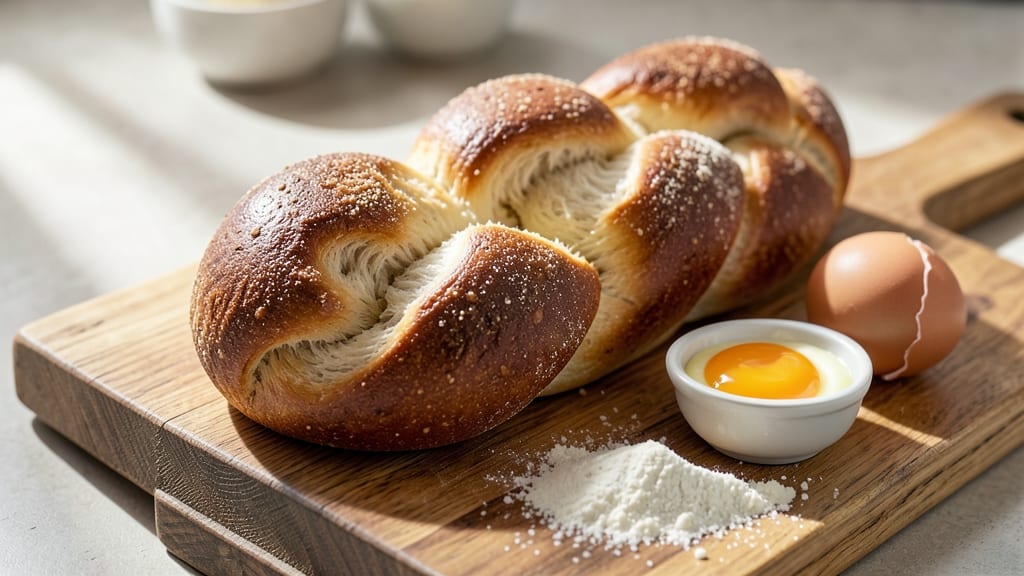
This challa bread recipe transforms simple ingredients into the iconic braided loaves that grace Sabbath tables with their golden swirls and tender crumb. 🌟 After years of perfecting my grandmother’s Sunday roast chicken, I finally cracked the code for challa—where the dough must be just right: neither too stiff nor too sticky, with the perfect balance of eggs and butter for that signature fluffiness.
The secret lies in the method: activating yeast properly, kneading until the dough develops that signature elasticity, and letting it rest for hours to build flavor. This isn’t just bread—it’s a tradition, a centerpiece that commands attention with its intricate braids and aromatic richness.
The golden crust gives way to a soft, pillowy interior that’s impossible to resist.
With precise timing and a few professional techniques, you’ll achieve restaurant-quality challa at home—no bakery skills required. The dough’s natural sweetness pairs beautifully with savory dishes or sweet spreads, making it versatile enough for everyday meals or special occasions. Let’s get started on creating something truly special.
Confession: I’ve burned more than a few loaves perfecting this recipe, but the results make every attempt worthwhile. Whether you’re celebrating the Sabbath or simply craving homemade bread, this method delivers consistent, impressive results. Here’s everything you need to know!
Ingredients for challa bread
Transform these eleven essential ingredients into Sabbath-worthy challa with golden swirls and tender layers.
| Ingredient | Amount | Notes |
|---|---|---|
| Active Dry Yeast 🍞 | ¼ tsp | Ensure freshness with expiration date check |
| Warm Water 💧 | 1 cup | 110°F for optimal yeast activation |
| All-Purpose Flour 🌾 | 5 cups | Bread flour preferred for structure |
| Granulated Sugar 🍚 | ¼ cup | Enhances yeast activation and flavor |
| Unsalted Butter 🧈 | ½ cup | Cold, cubed for proper incorporation |
| Large Eggs 🥚 | 2 whole | Room temperature for even distribution |
| Diamond Crystal Kosher Salt 🧂 | 1 ½ tsp | Adjusts to 1 tsp table salt ratio |
| Vegetable Oil 🫒 | 2 tbsp | For greasing bowl and brush |
| Poppy Seeds 🌻 | 1 tbsp | Traditional topping for decorative finish |
| Egg Wash 🥚 | 1 whole | Beaten with 1 tbsp water for glossy crust |
| Sesame Seeds 🌾 | 1 tbsp | Optional alternative to poppy seeds |
The yeast is foundational—King Arthur or Saf-Instant work best for reliable activation. Store-bought yeast loses potency after 4 months, so check the date. For the flour, King Arthur Bread Flour yields superior texture, but Gold Medal All-Purpose suffices if unavailable. The butter must be cold when added to prevent overdevelopment; cut it into small cubes and let it sit at room temperature for just 15 minutes before mixing. Eggs should be at room temperature for even distribution throughout the dough—cold eggs create dense pockets. Whole Foods or Trader Joe's carry high-quality eggs ideal for this recipe.
No bread flour? Add 1 tbsp vital wheat gluten per cup of all-purpose flour to mimic its structure. Substitute butter with vegetable shortening for a neutral flavor, though texture will differ slightly. For a dairy-free version, use coconut oil chilled to room temperature. The poppy seeds can be omitted or replaced with sesame seeds, which some prefer for their nutty flavor. If you lack poppy seeds, toasted sesame seeds work beautifully. The sugar can be reduced to 2 tbsp if you prefer a less sweet dough, though tradition favors the richer flavor. For a gluten-free adaptation, use a 1:1 gluten-free flour blend with xanthan gum, though texture will vary significantly.
Freshly activated yeast dough keeps for 24 hours in the refrigerator, covered with a damp towel. For longer storage, freeze shaped loaves (unbaked) wrapped in plastic for up to 3 months. Thaw overnight in the fridge before baking. The baked challa stays fresh for 2-3 days at room temperature wrapped in a clean kitchen towel. To revive stale challa, warm slices in a 350°F oven for 5-10 minutes until toasted. For braiding, divide dough into 3 equal strands and work quickly to maintain elasticity—chilled dough loses its flexibility faster. Always preheat your oven to 375°F for optimal rise and crust formation.
Why You'll Love This Recipe
- No-Knead Magic: I swear by the simplicity of this dough—just mix, let it rise, then shape. That warm butter folded into the flour gives it this buttery richness without the fuss of rolling or proofing for hours.
- Golden Crust Secret: The sugar in the dough caramelizes into a crisp, golden crust while keeping the inside pillowy soft. Honestly, the first time I bit into it still warm, I nearly dropped my coffee.
- Shabbat Ready: Between us, this is my go-to for Friday nights. The dough can rest overnight, so I wake up to the smell of baking bread—no last-minute stress, just pure satisfaction when it’s time to tear into it.
- Budget Stretch: A single batch feeds my whole family for days. Toast it for breakfast, use slices for sandwiches, or freeze the extras—this recipe turns a few simple ingredients into meals that last.
Step-by-step instructions for challa bread
Here's the method for achieving those iconic braided layers and golden crust every time.
👨🍳 Step 1: Activate the Yeast and Mix the Dough
In a small bowl, combine the 1 cup warm water (about 110°F) with the 0.25 cup granulated sugar and 0.25 tsp active dry yeast. Let this sit for 5-10 minutes until frothy—this confirms your yeast is alive and ready to work. If it doesn't bubble, your yeast may be expired or the water too hot.
In a large mixing bowl, whisk together the 5 cups all-purpose flour and 1.5 tsp diamond crystal kosher salt. Make a well in the center and pour in the yeast mixture along with the 2 whole large eggs and 0.5 cup cold unsalted butter, cut into small cubes. Mix with a wooden spoon until a shaggy dough forms, then turn it out onto a lightly floured surface and knead for 8-10 minutes until smooth and elastic.
🍳 Step 2: First Rise and Prepare the Dough
Lightly grease the same mixing bowl with 1 tbsp vegetable oil, then place the dough back inside. Cover with a clean kitchen towel and let rise in a warm place for 1-1.5 hours, or until doubled in size. The dough should feel light and springy when pressed gently—this is your visual cue it's ready for shaping.
While the dough rises, preheat your oven to 350°F. Line a baking sheet with parchment paper and set aside. Here's the thing—challa dough is delicate, so work quickly once it's risen to maintain its airiness.
🥘 Step 3: Shape and Braid the Challa
Punch down the risen dough to release air, then divide it into three equal pieces. Roll each piece into a long rope about 18 inches long. Lay them parallel to each other, then carefully braid them together from the bottom up, tucking the ends underneath to form a loop. This creates the classic challa shape.
Place the braided loaf seam-side down on the prepared baking sheet. Brush the top generously with the 1 whole egg wash (beaten with 1 tbsp water) for that signature glossy finish. Sprinkle evenly with either 1 tbsp poppy seeds or 1 tbsp sesame seeds—this is where the visual appeal comes from.
🔥 Step 4: Bake to Golden Perfection
Bake for 25-30 minutes until the challa reaches an internal temperature of 190°F and the bottom sounds hollow when tapped. The top should be deep golden brown with a crackly crust—this is your perfect doneness indicator. Real talk: your oven might run hot, so start checking at the 20-minute mark.
For that traditional Sabbath presentation, transfer the challa to a wire rack and let cool for 10 minutes before slicing. The layers should be tender and fluffy, with a slightly crisp exterior that gives way to soft, pillowy interior. If it cools too quickly, tent loosely with foil to maintain warmth.
Pro Tips For Making Challa Bread
- Bloom the Yeast First: Skip mixing yeast directly into flour—dissolve it in warm water with sugar first and let it foam for 5-10 minutes. I learned this the hard way after kneading dough that smelled like yeast but refused to rise. The bubbles tell you it’s alive and ready to work.
- Use Room-Temp Butter: Softened butter spreads easier and prevents tough dough, but don’t melt it—just let it sit out for 30 minutes until pliable. My first batch with cold butter ended up with pockets of butter that never incorporated, making the bread dense.
- Don’t Over-Knead: Stop when the dough springs back slowly (about 8-10 minutes by hand). Overworking it develops gluten too much, and challa needs that tender, slightly sticky texture. I used to knead until my arms ached—now I set a timer and walk away.
- Shape Loosely, Braid Tight: Roll the dough into a loose log first, then braid it gently—don’t pull too tight or the ends will rip. My grandmother swore by this, and she was right: the looser the initial shape, the more elegant the final braid holds.
Essential equipment for perfect results
Stand Mixer Setup
If you're using a stand mixer like my trusty KitchenAid Artisan Series, attach the dough hook attachment.
Mix the flour, salt, yeast mixture, eggs, and butter on low speed (2) for 2 minutes to combine, then increase to medium speed (4-5) for 5-7 minutes until the dough is smooth and elastic.
The mixer does the heavy work for you—just be sure to scrape down the sides every 2 minutes to prevent sticking. 💫
Hand-Kneading Essentials
For a more traditional approach, use a wooden dough scraper and your hands. Work the dough on a lightly floured surface, pressing down with your knuckles and folding it over itself. Turn the dough ¼ turn after each fold to ensure even development.
My grandmother swore by this method—it builds strength and elasticity naturally. A digital kitchen scale helps divide the dough evenly into 3 equal 16-ounce pieces for perfect braiding.
Baking Tools
Invest in a pizza stone or baking steel for that professional oven spring. Place it on the middle rack of your oven 30 minutes before baking to preheat thoroughly. A thermometer probe ensures accurate internal temperature reading—190°F is your target.
For shaping, keep a damp kitchen towel nearby to prevent sticking. I also recommend a sharp serrated knife for clean slices after baking.
Decorating Supplies
Poppy seeds and sesame seeds are traditional, but feel free to experiment with toasted everything bagel seasoning or crushed pistachios for a gourmet twist. Use a fine-mesh sieve to evenly distribute seeds without clumping.
A pastry brush makes egg wash application smoother. For presentation, a wooden bread board keeps the challa elevated and looking its best during cooling.
Storage Containers
Store baked challa in an airtight container with a paper towel underneath to absorb moisture. For freezing unbaked loaves, wrap tightly in plastic wrap followed by aluminum foil to prevent freezer burn.
I use quart-sized freezer bags for individual portions. When reheating, a steam basket in the oven preserves moisture better than the microwave.
Temperature Control
An oven thermometer is non-negotiable—most home ovens run 15-25°F hotter than set. For even baking, place a small water pan on the lower rack to create steam.
If your oven lacks even heat, rotate the baking sheet ½ way through for uniform browning. A wire cooling rack prevents soggy bottoms while cooling. 🔥
Nutrition facts
Frequently asked questions
Why does challa bread have braided strands?
The three-strand braid symbolizes the three patriarchs of the Jewish people—Abraham, Isaac, and Jacob—while also representing unity and connection. This traditional shape dates back centuries and is central to Sabbath celebrations. The braiding technique creates beautiful visual layers and helps distribute heat evenly during baking for consistent texture.
Can I make challa without eggs?
Yes! Replace the eggs with 2 tablespoons ground flaxseed mixed with 6 tablespoons water (let sit for 5 minutes to thicken). For flavor, add 1 teaspoon vanilla extract to the dough. The texture will be slightly denser, but still delicious. This works well for vegan or egg-free diets while maintaining the traditional sweetness.
How do I fix dough that's too sticky?
If your dough feels too sticky after kneading, gradually add 1 tablespoon flour at a time while kneading until it reaches a smooth, slightly tacky consistency. Overworking the dough can make it gummy, so stop when it springs back slowly when pressed. For extra insurance, chill the dough for 20 minutes before shaping—this helps firm it up for easier braiding.
What's the best way to reheat stale challa?
Wrap the challa in aluminum foil and warm at 350°F for 10-15 minutes until heated through. For extra crispiness, place slices on a baking sheet and toast for 3-5 minutes. A quick fix is using a toaster set to low—just watch closely to prevent burning. The key is gentle heat to restore softness without drying it out.
Can I make challa ahead of time?
Shape the braided loaves and refrigerate them overnight (covered). Bake straight from the fridge—just add 5-10 minutes to the baking time. For longer storage, freeze unbaked challa wrapped in plastic for up to 3 months. Thaw in the fridge before baking. This makes perfect sense for busy Sabbath mornings when you want everything ready to go.