
Side Dishes
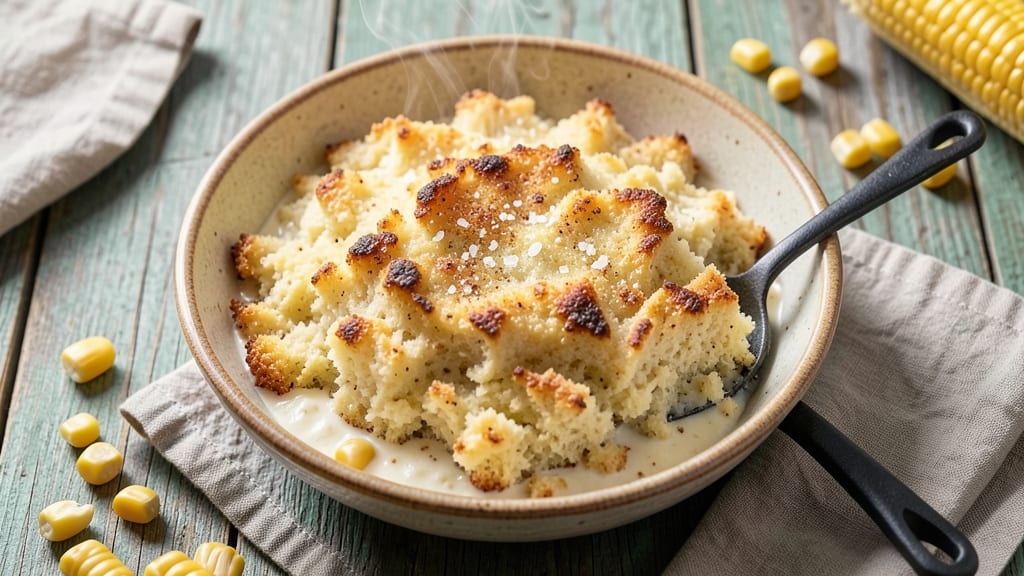
Christiana Campbell's tavern spoon bread recipe brings the soul-warming comfort of a Southern kitchen to your table, where buttermilk and cornmeal create a tender, crumbly masterpiece.
This traditional dish, often served as both side and main, transforms simple pantry staples into something extraordinary with just a cast-iron skillet and a few minutes of attention. The magic happens when hot butter meets the golden, crackly crust—each bite delivers that perfect balance of richness and tang.
What sets this spoon bread apart is its versatility—equally at home alongside fried chicken for dinner or as a breakfast centerpiece with honey and butter.
The recipe stays true to Christiana Campbell’s Tavern version, where buttermilk’s tang cuts through the cornmeal’s earthiness, creating a texture that’s both tender and slightly crisp at the edges. No fancy equipment needed; just a skillet, a wooden spoon, and patience for the golden bubbles to form.
By the time you pull that skillet from the heat, you’ll have a dish that feels like a hug—warm, inviting, and impossible to resist. The aroma alone will have everyone gathering around the table, while the texture delivers that satisfying contrast of creamy interior and crispy crust.
This is comfort food at its finest, a recipe that carries generations of Southern tradition with every bite.
Perfect for feeding a crowd or saving leftovers for days, this spoon bread adapts effortlessly to any meal. Whether you’re serving it with gravy for breakfast or alongside a hearty stew for dinner, the simplicity of the ingredients belies the depth of flavor.
Let’s get started on creating this Southern classic in your own kitchen.
Ingredients for christiana campbell's tavern spoon bread
Eight simple staples transform into golden, buttery spoon bread with Southern charm.
| Ingredient | Amount | Notes |
|---|---|---|
| All-Purpose Flour 🌾 | 2 cups | Sifted for light texture |
| Cornmeal 🌽 | 1 cup | Fine grind for smooth crumb |
| Granulated Sugar 🍚 | 1 tbsp | Light brown preferred |
| Baking Powder 🍞 | 1 tbsp | Aluminum-free for best rise |
| Salt 🧂 | ½ tsp | Diamond Crystal preferred |
| Buttermilk 🥛 | 1 ½ cups | Full-fat for richness |
| Unsalted Butter 🧈 | ½ cup | Cold, cubed for texture |
| Large Eggs 🥚 | 2 whole | Room temperature for blending |
| Freshly Ground Black Pepper 🌶️ | ¼ tsp | For subtle heat |
| Extra-Virgin Olive Oil 🫒 | 1 tbsp | For greasing skillet |
| Shredded Sharp Cheddar Cheese 🧀 | ½ cup | Optional for extra richness |
The buttermilk is non-negotiable here—it’s what gives this bread its signature tang and tender crumb. Land O’Lakes or Organic Valley full-fat buttermilk works best, but if you’re in a pinch, mix 1 tbsp lemon juice or vinegar with 1.5 cups milk and let it sit for 5 minutes. The cornmeal needs to be fine grind (not stone-ground)—Bob’s Red Mill is my go-to. For the flour, King Arthur or Gold Medal both work, but sift it first to avoid lumps. The butter should be cold and cubed—this creates those little pockets of melt-in-your-mouth richness. Pro tip: buy it in 1-pound blocks at Whole Foods or Trader Joe’s—it stays fresher longer.
No buttermilk? Milk plus an acid is your best bet—lemon juice, vinegar, or even a splash of pickle brine. Running short on cornmeal? Substitute ½ cup all-purpose flour, but the texture will be slightly denser. Want to skip the cheese? No problem—it’s optional, but adds that extra Southern touch. The baking powder is key here—aluminum-free is crucial for a tender crumb. If you only have double-acting, reduce it to 1 tsp and add ½ tsp baking soda for lift. For the olive oil, California Avocado Ranch is my favorite for greasing—it’s light and doesn’t overpower. And if you’re feeling fancy, swap the cheddar for pepper jack or Gouda.
This bread reheats beautifully—just pop a slice into a 350°F oven for 5-7 minutes until golden. Store leftovers in an airtight container for up to 3 days, but honestly, it’s best fresh. For a crowd, double the recipe—just make sure your skillet is big enough. Cast iron is ideal, but a well-seasoned stainless steel pan works too. Freeze extras in 1-inch thick slices for up to 3 months. To serve, tear into chunks or cut into wedges—either way, it’s a crowd-pleaser.
Why You'll Love This Recipe
- No-Fuss Mixing: I swear by this recipe because it’s literally three bowls and a whisk. The cornmeal gives it that perfect gritty texture without extra steps—just stir, pour, and bake. Honestly, my hands are rarely this clean after making bread.
- Sweet-Savory Magic: That little pinch of sugar in the dry mix? It’s the secret. The bread turns out tender with a subtle caramel note, especially when you toast it the next day. My kids fight over the last slice—yes, even my picky eater.
- Weeknight Workhorse: Serve it warm with gravy for Sunday dinner or cold in lunchboxes on Mondays. It reheats like a dream and pairs with everything—eggs, chili, even just butter. Between us, it’s my go-to when I’m too tired to plan.
- Pantry Staple: Five ingredients, zero specialty items. If you’ve got flour and salt, you’ve got spoon bread. And because it keeps for days (or freezes perfectly), I make a double batch. My wallet and my family thank me every time.
Step-by-step instructions for Southern-style drop biscuits with buttermilk
Here's how to make these tender, flaky spoon breads with a crisp golden crust.
Whisk Dry Ingredients for Light Texture
In a large mixing bowl, combine the 2 cups all-purpose flour, 1 cup cornmeal, 1 tablespoon granulated sugar, 1 tablespoon baking powder, and ½ teaspoon salt. Use a whisk to break up any lumps in the cornmeal and distribute the baking powder evenly. This ensures your biscuits rise properly and develop that signature flaky texture.
I like to sift the dry ingredients through a fine-mesh sieve before whisking—this prevents dense pockets in the finished bread. Once combined, set the bowl aside. The reason we mix these dry ingredients first is to create a uniform base before adding the wet components, which prevents overmixing later when we combine everything.
Cut in Cold Butter for Flaky Layers
Add the ½ cup cold, cubed unsalted butter to the dry ingredients. Using a pastry cutter or two forks, work the butter into the flour mixture until you achieve pea-sized crumbles. You want to avoid overworking the dough—just until the butter is evenly distributed and no large chunks remain.
Here's the thing—cold butter is crucial. When it melts during baking, it creates those beautiful flaky layers. If the butter gets warm and turns into a paste, your biscuits will be dense instead of light. Work quickly but gently to maintain those cold butter pieces as long as possible.
Blend Wet Ingredients for Rich Moisture
In a separate bowl, whisk together the 1½ cups buttermilk, 2 whole large eggs (at room temperature), ¼ teaspoon freshly ground black pepper, and ½ cup shredded sharp cheddar cheese (if using). The buttermilk should be well combined with the eggs—no streaks should remain. This mixture forms the soul of your spoon bread, giving it that signature Southern richness.
I always use room-temperature eggs because they blend more smoothly into the buttermilk. The cheese, if included, should be finely shredded so it distributes evenly. If you're making this ahead, now's the time to cover the wet ingredients and refrigerate while you prepare the baking surface.
Combine and Drop Biscuits onto Hot Skillet
Create a well in the center of the dry ingredients and pour in the wet mixture. Using a wooden spoon or rubber spatula, gently fold everything together until just combined—you should still see some dry flour streaks. The dough will be thick and sticky, almost like a very wet batter.
Heat a 10-inch cast-iron skillet over medium heat and add 1 tablespoon extra-virgin olive oil. Once the oil is shimmering (about 1 minute), use a ¼-cup measuring cup to drop 8 equal portions of dough into the skillet, spacing them about 1 inch apart. The skillet should be hot enough that the dough sizzles gently when it hits the surface.
Bake Until Golden and Springy
Cover the skillet with a lid and bake for 12-15 minutes until the tops are golden brown and the biscuits spring back when pressed lightly in the center. The key here is patience—don't peek at the biscuits or lift the lid early, as the steam is what creates that perfect texture.
When they're done, remove the biscuits to a wire rack and let them cool for 5 minutes before serving. The internal temperature should reach 190-195°F at their thickest point. These biscuits are best served warm, straight from the skillet, with a pat of butter melting on top or alongside your favorite Southern gravy.
Pro Tips For Making Christiana Campbell'S Tavern Spoon Bread
- Whisk the Buttermilk First: I learned this the hard way—mixing dry ingredients into buttermilk after whisking it with sugar and baking powder makes a smoother batter. The sugar dissolves faster, and the baking powder activates evenly, so your spoon bread rises taller and doesn’t get that dense, gummy center.
- Toast the Cornmeal: Skip the raw cornmeal—lightly toast it in a dry skillet over medium heat for 2-3 minutes until it smells nutty. This adds depth to the flavor and prevents that chalky aftertaste that ruins the texture. (Yes, it’s an extra step, but it’s worth it.)
- Avoid Overmixing the Batter: Once you fold in the flour-cornmeal mix, stop stirring after 10-12 turns. Overworking it develops gluten, and your spoon bread turns into a tough, flat pancake instead of that pillowy, crackly-topped classic. Lumpy is fine—it’s supposed to be rustic.
- Preheat Pan on Medium-High: Too many people use low heat, and the bread steams instead of browning. Crank your cast-iron or skillet to medium-high for 3-4 minutes before pouring, then drop to medium. That initial heat guarantees a crispy crust, not a sad, pale top. (Your future self will notice.)
Troubleshooting great christiana campbell's tavern spoon bread
Dough Too Sticky
If your spoon bread batter feels too thick or sticky to work with, it’s likely because the butter warmed up too quickly during mixing. To fix this, chill the dough for 15-20 minutes before proceeding—this helps the butter re-solidify slightly.
If it’s still too wet, add 1-2 tablespoons more flour until it forms a dough that can be dropped easily. I’ve found that using King Arthur flour (which has a higher protein content) helps absorb excess moisture better than some other brands. 💡
Biscuits Not Rising
If your spoon bread isn’t rising properly, the issue is usually stale baking powder or overmixing. First, check the expiration date on your baking powder—it loses potency over time. If it’s fresh, try reducing the heat slightly to medium-low and covering the skillet with a lid to trap steam.
Overmixing activates the gluten, making the bread dense instead of light. Mix just until combined, and avoid using a stand mixer for this recipe. 🌟
Uneven Cooking
Unevenly cooked spoon bread often happens when the skillet isn’t hot enough or the biscuits aren’t spaced evenly. Make sure your 10-inch cast-iron skillet is preheated for at least 3-4 minutes before adding the dough.
Space the biscuits about 1 inch apart to allow heat to circulate evenly. If one side is browning too quickly, reduce the heat to medium-low and cover the skillet to slow the cooking process. 🔥
Crust Too Hard
A hard crust usually means the skillet was too hot or the biscuits were overbaked. Start by reducing the heat to medium-low and covering the skillet immediately after dropping the dough. Check for doneness by pressing gently—they should spring back when ready.
If the crust is already too hard, try brushing the tops with a little melted butter after baking to soften it. I like to use European-style butter (like Plugrá) for this because it has a higher fat content. ✨
Dough Spreads Too Much
If your spoon bread spreads out too thin in the skillet, the dough was likely too warm when dropped in. Let the dough rest for 10-15 minutes in the fridge before dropping it into the skillet—this helps it hold its shape better.
You can also try using a ¼-cup measuring cup to drop the dough more precisely, tapping it gently to release any air bubbles. For extra structure, add 1 tablespoon cornstarch to the dry ingredients. 💪
Biscuits Fall Apart
If your spoon bread falls apart when trying to serve it, the dough was likely undercooked or overmixed. Make sure the internal temperature reaches 190-195°F before removing it from the skillet. To prevent overmixing, fold the dough just until combined—no need to overwork it.
If the texture is still too crumbly, try brushing the tops with a little extra buttermilk before baking to add moisture. 🥗
Nutrition facts
Frequently asked questions
What makes this spoon bread different from regular cornbread?
This Southern-style spoon bread uses buttermilk instead of milk, creating a tangy, tender crumb that's lighter than traditional cornbread. The dough is dropped directly into a hot skillet rather than baked in a pan, giving it a crispy exterior and soft interior. Plus, the cornmeal-to-flour ratio is adjusted for a more delicate texture.
Can I make this recipe without buttermilk?
Mix 1 tbsp lemon juice or vinegar with 1½ cups milk and let it sit for 5 minutes to mimic buttermilk. For best results, use whole milk and full-fat sour cream (1 tbsp) for extra richness. The tang is essential for that signature Southern flavor.
How do I know when the spoon bread is fully cooked?
The biscuits are done when they're golden brown on top and spring back when pressed gently in the center. The internal temperature should reach 190-195°F at their thickest point. Never lift the lid early—the steam is what creates that perfect texture.
Can I make this ahead of time?
Yes! Prepare the dough up to 24 hours ahead and refrigerate it. When ready to cook, let it sit at room temperature for 30 minutes before dropping into the skillet. For leftovers, store in an airtight container for up to 3 days or freeze slices for 3 months. Reheat in a 350°F oven for 5-7 minutes.
What's the best way to serve this spoon bread?
Serve warm straight from the skillet with a pat of melted butter or honey. It pairs perfectly with fried chicken, Southern gravy, or as a side for breakfast. For extra flair, sprinkle with flaky sea salt or serve with a dollop of whipped cream. The possibilities are endless!