
Side Dishes
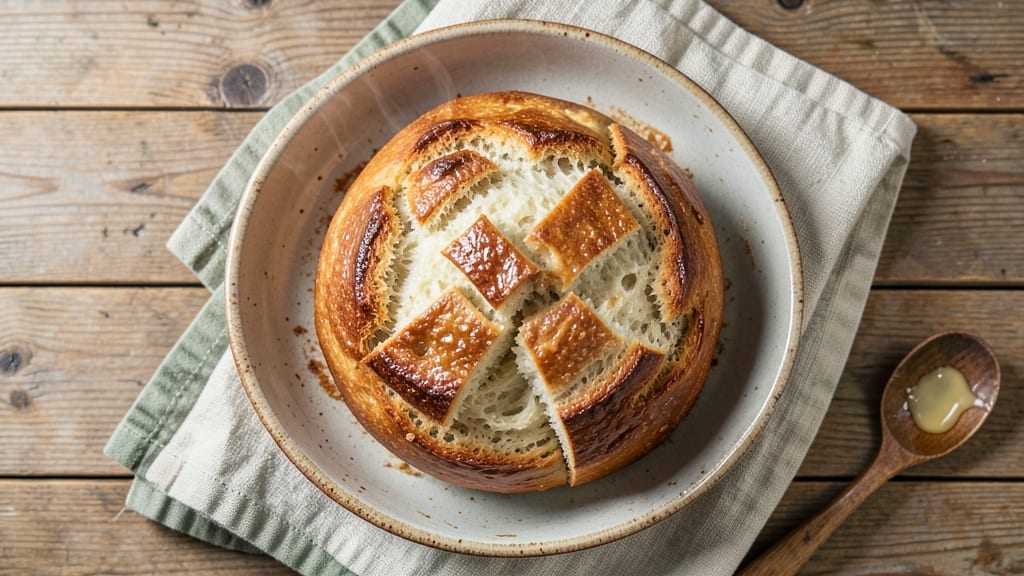
This classic white miche bread Panera recipe delivers the iconic buttery swirls and crispy crust that make it a bakery favorite—after years of perfecting my technique, including that signature egg wash and precise proofing, I finally cracked the code for restaurant-quality bread. results at home.
The secret lies in the dough's texture: tender yet sturdy enough to hold those golden swirls without tearing.
What sets this recipe apart is the two-stage proofing process, which develops maximum flavor and rise. Unlike quick breads, this requires patience—letting the dough rest overnight in the fridge creates a deeper flavor and easier shaping.
The butter swirls are the star, but the real magic happens in the oven when that egg wash transforms into a glossy, crackly crust.
By the time your loaf emerges from the oven, you'll have a pillowy interior with a crisp exterior and those signature buttery swirls that melt in your mouth. The aroma alone will have everyone gathering around your kitchen.
This bread is perfect for sandwiches, toast, or simply enjoying warm with butter—just like the bakery version, but made with love (and a little extra butter).
For best results, use a standard loaf pan and brush that egg wash generously—it's what creates that signature shine and crisp. The recipe yields one 9x5-inch loaf, but you can double it for a crowd. Let's bake that perfect miche!
Ingredients for classic white miche bread panera
Pantry staples plus a few key tricks for bakery-style buttery perfection at home.
| Ingredient | Amount | Notes |
|---|---|---|
| All-Purpose Flour 🌾 | 5 cups | Spooned and leveled for accuracy |
| Active Dry Yeast 🍞 | ¼ oz | Or 2 1/4 tsp (one packet) |
| Granulated Sugar 🍚 | ¼ cup | For yeast activation |
| Unsalted Butter 🧈 | ¾ cup | Cold, cubed for swirls |
| Large Eggs 🥚 | 2 whole | Room temperature for wash |
| Whole Milk 🥛 | ½ cup | Warmed to 110°F |
| Salt 🧂 | 1 ½ tsp | Kosher or sea salt |
| Granulated Sugar 🍚 | 1 tbsp | For dough enrichment |
| Large Egg Yolk 🥚 | 1 whole | For egg wash |
| Water 💧 | ¼ cup | Warm for yeast activation |
| Vegetable Oil 🫒 | 1 tbsp | For greasing pan |
The yeast is non-negotiable here—Fresh & Easy or Fleischmann's are my go-tos, but any active dry will work. The butter? Land O'Lakes unsalted is my secret weapon for those perfect swirls. Grab it cold from the fridge so it stays in chunks during mixing. For the flour, King Arthur or Gold Medal brands give the best texture. Don't skimp on the milk either—warm it to 110°F so it activates the yeast faster. If you're in a pinch, whole milk powder mixed with warm water works, but fresh milk is ideal.
No butter swirls? Cream cheese or margarine works in a pinch, but butter's flavor can't be beat. Short on yeast? Instant yeast at half the amount works too—just mix it right into the flour. The egg wash is crucial: if you're out of eggs, milk plus a splash of vinegar mimics the shine. For the dough, Bread Machine Flour can replace all-purpose if you want extra tenderness. And if your kitchen's too hot, chill the dough 30 minutes before shaping to prevent overproofing.
This dough is a beast—it needs 24 hours in the fridge for maximum flavor. Portion it into two 9x5-inch loaf pans for perfect slices. The swirls? Cut butter into strips before folding—thicker strips mean fewer swirls. Fresh bread reheats beautifully: 5 minutes at 350°F with foil keeps it soft. Freeze extras for up to 3 months—just thaw overnight wrapped in a towel.
Why You'll Love This Recipe
- No-Knead Magic: I swear by this dough—just mix, rest, and bake. The yeast and butter do all the work while you sip coffee, and that pillowy crumb? Zero effort, all reward.
- Butter-Kiss Softness: That rich, creamy texture comes from just the right amount of cold butter folded into the dough. One bite and you’ll understand why Panera’s version is legendary—it’s like eating a cloud with a crispy crust.
- Weeknight Workhorse: Toss a loaf in the oven while you prep dinner, or freeze half for lazy mornings. It’s my go-to for sandwiches, toast, or even garlic bread—always a crowd-pleaser, never a flop.
- Pantry Staple Payoff: Flour, yeast, sugar, butter, eggs—everything’s already in your cupboard. For under $5, you’ll get enough for a week of meals, toast, or even a fancy charcuterie board. Budget-friendly doesn’t get better than this.
Step-by-step instructions for classic white miche bread with buttery swirls
Here's how to create that iconic Panera-style miche with golden crust and rich butter swirls.
Activate the Yeast and Mix the Dough
In a large bowl, combine the 0.25 cup warm water (about 110°F) with the 0.25 cup granulated sugar and 0.25 oz active dry yeast. Let it sit for 5-10 minutes until frothy—this tells you your yeast is alive and ready to work. If it doesn't bubble, start over with fresh yeast.
In a separate bowl, whisk together the 5 cups all-purpose flour and 1.5 tsp salt. Make a well in the center and pour in the yeast mixture along with the 0.5 cup warm whole milk and 2 whole large eggs. Mix with a wooden spoon until a shaggy dough forms, then turn it out onto a lightly floured surface.
Knead the dough for 8-10 minutes by hand until smooth and elastic. You'll know it's ready when it springs back when poked and doesn't stick to your fingers. If it's too sticky, add flour 1 tablespoon at a time; if too dry, add 1 teaspoon water. This step develops gluten, which gives your bread that classic chewy texture.
First Rise and Prepare the Butter Swirls
Lightly grease a large bowl with 1 tablespoon vegetable oil, place the dough inside, and cover with a damp towel. Let it rise in a warm place for 1-1.5 hours or until doubled in size. The dough should look puffy and jiggly when gently pressed.
While the dough rises, prepare the butter swirls. Take the 0.75 cup unsalted butter from the fridge and cut it into small cubes. Roll each cube into a thin rope about 12 inches long. Keep these chilled until ready to use.
Here's the thing—don't skip chilling the butter. Cold butter creates those beautiful, defined swirls that melt into golden ribbons during baking. If your kitchen is warm, pop the butter cubes in the freezer for 10 minutes before rolling.
Shape the Dough and Add Butter Swirls
Once the dough has risen, punch it down to release air, then divide it into 4 equal pieces. Roll each piece into a 12-inch log about 3 inches wide. Place one butter rope along the center of each log, then fold the dough over the butter to completely enclose it.
Seal the edges by pinching them firmly. Roll each log gently but firmly to create a smooth, cylindrical shape. Arrange the logs side by side in a 9x5-inch loaf pan that's been lightly greased with 1 tablespoon vegetable oil. The dough should fit snugly but not overflow.
Cover the pan with a damp towel and let the dough rise for another 45-60 minutes until it's just about to overflow the pan. The butter will start to press against the sides—this is perfect. If it rises too much, the butter will leak out during baking.
Bake to Golden Perfection
Preheat your oven to 375°F and position a rack in the lower third. Brush the risen dough with a mixture of 1 whole large egg yolk and 1 tablespoon granulated sugar for that signature glossy finish. Bake for 30-35 minutes until the bread is deep golden brown and sounds hollow when tapped on the bottom.
I always check for doneness at the 25-minute mark—your oven might run hot, so start checking early. The internal temperature should reach 190-200°F. If the top browns too quickly, tent it loosely with foil after 20 minutes to prevent over-browning.
Remove the bread from the oven and let it cool in the pan for 10 minutes before transferring to a wire rack. The butter swirls will be soft and gooey when hot, but they'll set as the bread cools. Slice while still warm for those perfect buttery layers.
Pro Tips For Making Classic White Miche Bread Panera
- Bloom the Yeast Properly: Skip the warm water test—just mix the yeast with a splash of room-temperature milk (from the recipe) and 1 tsp sugar, then let it sit for 5-10 minutes until it’s frothy. I learned the hard way that dry yeast + cold water = sad, flat bread. If it doesn’t bubble, start over.
- Soft Butter Matters: Use butter that’s just soft—not melted, not cold, but pliable when pressed. The Panera recipe relies on that butter for tenderness, and if it’s too firm, the dough fights you during mixing. Let it sit at room temp for 30 minutes before measuring.
- Don’t Overwork the Dough: Mix the dough until it’s just combined—about 3-4 minutes by hand or 2 minutes in a stand mixer with a dough hook. Over-kneading develops gluten too much, and this bread needs that soft, slightly sticky texture. Stop when it pulls away cleanly from the bowl.
- Steam the Pan First: Before baking, spray the pan with oil and place it in the oven for 5 minutes while preheating. The steam creates a crisp crust right out of the gate—no waiting for the bread to set. I was skeptical until I tried it, and now I never skip this step.
Troubleshooting your classic white miche bread panera
Dough Too Sticky
If your dough feels like glue during kneading, you're likely overhydrated. I’ve found that adding flour 1 tablespoon at a time while kneading solves this—just don’t overdo it, or your bread will turn dense.
For extra insurance, chill the dough for 30 minutes before shaping; cold dough handles better and prevents sticking. 🧂
Butter Swirls Leaking
This usually happens when the dough rises too long before baking. The butter should press against the sides but not burst out. If you see leaks, gently press the dough back into the pan and bake immediately.
Pro tip: Use Land O’Lakes unsalted butter—it holds its shape better than margarine during proofing. For extra security, wrap the pan in foil before baking to contain any melted butter.
Flat or Dense Bread
A flat loaf often means underproofed dough or insufficient kneading. Let the dough rise until it’s doubled in size—jiggly when pressed is the gold standard. If it’s still flat after the first rise, give it another 30-60 minutes—patience here is key.
For density issues, ensure you knead for the full 8-10 minutes—this develops gluten, which gives bread its structure. If all else fails, try replacing 1 cup of flour with bread flour for better rise.
Pale Crust or No Shine
The egg wash is your secret weapon for that golden, glossy crust. Whisk the 1 egg yolk + 1 tbsp sugar—the sugar caramelizes during baking for extra color. Brush it on generously right before baking.
If your crust is still pale, broil for 1-2 minutes—watch closely to avoid burning. For extra shine, add 1 tsp water to the wash to help it spread evenly.
Uneven Swirls
Uneven swirls usually mean the butter wasn’t chilled enough or the dough wasn’t rolled tightly. Keep your butter cubes cold—roll them into ropes right before folding them into the dough. Seal the edges firmly when pinching, and roll the logs gently but evenly.
If your kitchen’s warm, chill the dough for 20 minutes—this helps the butter stay defined during baking. For extra precision, use a bench scraper to trim excess dough before shaping.
Bread Collapses After Baking
This classic mistake happens when the dough overproofs or the oven isn’t hot enough. Preheat your oven to 375°F—no shortcuts here. If your bread collapses, it’s likely because the yeast overworked itself.
Next time, reduce the first rise to 45 minutes—just until it’s puffy but not fully doubled. For extra support, bake the loaf on the middle rack instead of the bottom—this helps the crust set faster and prevents sinking. 💪
Nutrition facts
Frequently asked questions
Can I make this recipe without a stand mixer?
This dough is designed for hand-kneading. Work the dough on a lightly floured surface for 8-10 minutes until smooth and elastic. The key is patience—press and fold the dough rather than pulling it, which helps build gluten without overworking it. A dough scraper makes cleanup easier too!
Why does the recipe call for overnight proofing?
The overnight fridge proof (cold fermentation) develops deeper flavor and a better texture. The slow rise allows the gluten to relax, making shaping easier and creating that signature tender crumb. Skip it in a pinch? Proof for 2 hours at room temperature instead, but expect slightly less flavor development.
What if I don't have a loaf pan?
Use a 9x5-inch baking dish or even a well-greased cast-iron skillet. For a rustic look, shape the dough into a free-form round on a baking sheet lined with parchment. Brush with egg wash and bake at 375°F for 25-30 minutes until golden. The crust will be thicker but still delicious!
Can I substitute butter with something else?
For the swirls, use cream cheese or margarine in equal amounts, but butter gives the best flavor. If you're avoiding dairy, try coconut oil (solid at room temperature) or vegetable shortening, though the texture will differ slightly. Chill the substitute well before rolling to maintain shape.
How do I store or reheat this bread?
Keep it wrapped at room temperature for 2-3 days or freeze slices for up to 3 months. To reheat, wrap slices in foil and warm at 350°F for 5-7 minutes or use the microwave with a damp paper towel for 10-15 seconds. For extra crispiness, toast slices in a dry skillet over medium heat for 1-2 minutes.