
Side Dishes
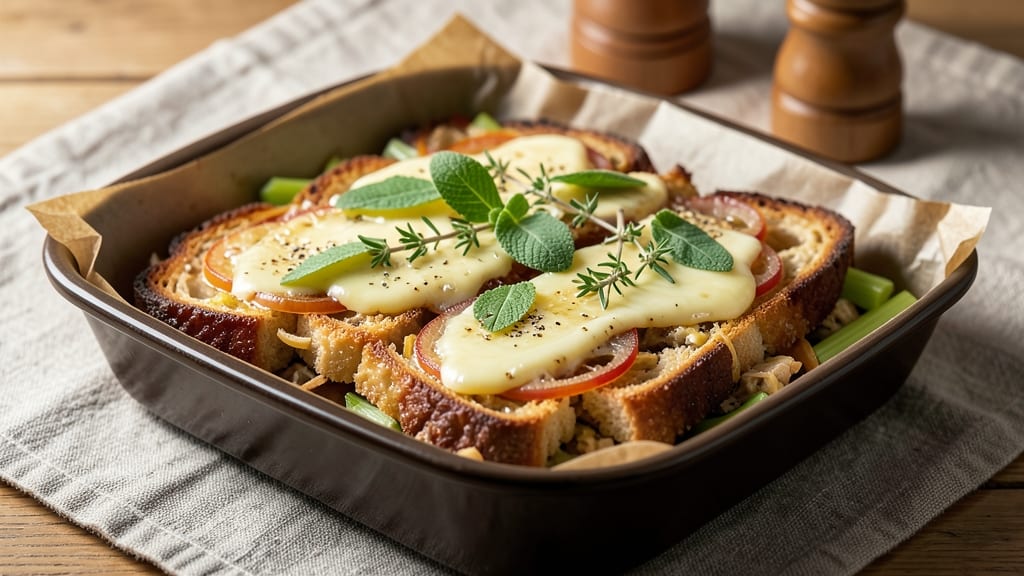
This artisan bread stuffing recipe transforms day-old loaves into a savory, golden crumb that soaks up gravy like a dream. 🌟 The secret lies in perfectly toasted bread cubes, aromatic herbs, and a rich base of onions and celery—no dry, crumbly results here.
I’ve perfected this technique over years of holiday tables, ensuring every bite delivers that ideal balance of texture and flavor.
What sets this stuffing apart is the foolproof method that guarantees a tender, flavorful center with crispy edges. We start by toasting the bread just enough to remove moisture without burning, then build layers of savory depth with sautéed vegetables and herbs.
Optional additions like sausage or mushrooms add richness, while a touch of poultry seasoning elevates it to restaurant-quality.
The result is a golden, fragrant stuffing that’s moist yet sturdy enough to hold its shape—perfect for stuffing turkeys, pairing with roasted meats, or serving as a standalone side. The crust stays crispy even after baking, while the interior remains tender and packed with flavor.
This isn’t your grandmother’s dry stuffing; it’s a showstopper that complements any main dish.
Ready in about 45 minutes, this recipe scales effortlessly for crowds or small gatherings. Whether you’re hosting Thanksgiving or a weeknight dinner, this stuffing delivers restaurant-quality results with minimal fuss. Let’s get started!
Ingredients for artisan bread stuffing
Artisan bread cubes, aromatic herbs, and golden butter create this showstopper stuffing—perfectly balanced texture and flavor.
| Ingredient | Amount | Notes |
|---|---|---|
| Day-Old Artisan Bread 🍞 | 8 cups | Cubed into 1-inch pieces |
| Unsalted Butter 🧈 | ½ cup | Cold, cubed for even toasting |
| Yellow Onion 🧅 | 1 whole | Diced into 1/4-inch pieces |
| Celery Stalks 🥬 | 3 whole | Diced into 1/4-inch pieces |
| Fresh Sage Leaves 🌿 | ¼ cup | Chopped, stems removed |
| Fresh Thyme Sprigs 🍃 | 2 whole | Leaves only, stems discarded |
| Garlic Cloves 🧄 | 4 cloves | Minced for aromatic depth |
| Chicken Broth 💧 | 1 ½ cups | Low-sodium preferred |
| Heavy Cream 🥛 | ¼ cup | Full-fat for richness |
| Salt 🧂 | 1 ½ tsp | Diamond Crystal preferred |
| Black Pepper 🌶️ | 1 tsp | Freshly ground for heat |
| Poultry Seasoning 🍗 | 1 tsp | For restaurant-quality flavor |
| Optional Sausage 🌭 | ½ lb | Italian or chicken sausage, crumbled |
| Optional Mushrooms 🍄 | ½ cup | Cremini, finely chopped |
The bread is non-negotiable—artisan loaves like sourdough or brioche yield the best texture, but any sturdy day-old bread works. Whole grain or crusty baguettes add depth, while French bread stays light. Toast the cubes until golden but not browned—this removes moisture without burning. For the herbs, fresh sage and thyme are essential; dried won’t deliver the same aromatic punch. If you’re short on time, Trader Joe’s sells pre-chopped fresh herbs in convenient packages that keep for days in the fridge.
No chicken broth? Vegetable broth with a pinch of poultry seasoning works, though the flavor will differ slightly. Fresh herbs wilt fast, so chop them just before toasting the bread—no prepping ahead here. The sausage or mushrooms, if using, should be cooked and crumbled before mixing. Pre-shredded cheese? Skip it—it gets gummy. Instead, grate your own Parmigiano-Reggiano if adding. For extra richness, swap half the broth for white wine—just reduce it first to concentrate the flavor.
This stuffing reheats beautifully—cover with foil for 10 minutes to revive moisture, then crisp under the broiler. Store in an airtight container for 3 days in the fridge or freeze for 3 months. I always make a double batch: one for the turkey, one for stuffed acorn squash later in the week. The golden crust stays crispy for hours, while the interior remains tender. For large gatherings, scale up the bread and broth proportionally—10 cups bread to 2 cups broth maintains the perfect ratio.
Why You'll Love This Recipe
- No-Waste Magic: I swear by using day-old artisan bread—no crusts, no stress. That stale loaf? It’s the secret to a stuffing that’s crispy on the outside but still tender inside, no extra drying required.
- Sage-Kissed Richness: The moment I fold in fresh sage leaves and melt that butter into the onions, my kitchen smells like autumn Sunday dinner. It’s that perfect balance of savory, herby, and buttery—simple ingredients, but oh-so-satisfying.
- Holiday or Weeknight: Between us, this stuffing works just as well in a casserole dish as it does stuffed inside a turkey. Honestly, I’ve made it for Thanksgiving, Christmas, and even a lazy Sunday brunch—no rules, just flavor.
- Budget-Friendly Leftovers: A single batch stretches for days—toss it into soups, sandwiches, or even fried up for a crispy snack. I’ll be real: the first time I reheated mine, I almost made a whole new meal out of it.
Step-by-step instructions for artisan bread stuffing
Here's how to transform day-old bread into a golden, flavorful stuffing that soaks up every drop of gravy.
🔥 Step 1: Toast the Bread for Maximum Crispiness
Preheat your oven to 350°F and spread the 8 cups of cubed day-old artisan bread evenly on two rimmed baking sheets. The cubes should be about 1-inch in size—this ensures even toasting without burning. Spread them in a single layer so they crisp up properly.
Bake for 15-20 minutes, stirring once halfway through, until the bread is golden brown and completely dry to the touch. This step is crucial—it prevents a soggy stuffing later. Remove from the oven and let cool slightly before moving to the next step. The bread should be cool enough to handle but still retain its crisp texture.
👨🍳 Step 2: Sauté the Aromatic Vegetables
In a large skillet over medium heat, melt the 0.5 cup of cold, cubed unsalted butter. Add the diced yellow onion and diced celery stalks, cooking for 5-7 minutes until softened and beginning to caramelize. You want the vegetables to release their moisture but not brown too much—this keeps the stuffing from becoming bitter.
Add the minced garlic cloves and cook for 30 seconds until fragrant. Stir in the chopped fresh sage leaves and thyme leaves, cooking for another 1 minute. If using the 0.5 lb optional sausage, add it now and cook until browned. For the 0.5 cup optional mushrooms, cook them separately in a clean pan until they release their moisture and then add to the skillet. Remove from heat and let cool slightly.
🥘 Step 3: Combine All Ingredients for Perfect Texture
In a large mixing bowl, combine the toasted bread cubes with the sautéed vegetable mixture. Sprinkle over the 1.5 tsp salt, 1 tsp black pepper, and 1 tsp poultry seasoning, tossing gently to distribute evenly. The bread should be fully coated with the vegetables and seasonings—this ensures every bite is packed with flavor.
In a separate bowl, whisk together the 1.5 cups chicken broth and 0.25 cup heavy cream. Pour this liquid mixture over the bread and vegetables, tossing carefully until everything is evenly moistened. The stuffing should be damp but not wet—if it looks too dry, add a splash more broth. If it's too wet, add a few more toasted bread cubes to absorb the moisture. This balance is key for a stuffing that holds together without being soggy.
🔥 Step 4: Bake Until Golden and Tender
Transfer the stuffing mixture to a greased 9x13-inch baking dish. Cover tightly with aluminum foil and bake at 350°F for 30 minutes. After this initial baking time, remove the foil and continue baking for another 15-20 minutes until the top is golden brown and the stuffing is heated through.
To test for doneness, insert a knife into the center—it should come out hot but not wet. If the top isn't brown enough, broil for 2-3 minutes, watching closely to avoid burning. The stuffing should be tender and crispy at the same time, with a flavorful crust that contrasts beautifully with the moist interior. Let it rest for 5-10 minutes before serving to allow the juices to redistribute.
Pro Tips For Making Artisan Bread Stuffing
- CRUMBLE DRY FIRST: Tear that day-old artisan bread into 1-inch chunks and spread them on a baking sheet. Pop them in a 300°F oven for 10-15 minutes until completely dry—this prevents a soggy stuffing later. (Yes, it’s tedious, but trust me, it’s worth it.)
- SWEAT THE VEGETABLES: Cook your onions and celery in butter until the onions turn translucent and the celery softens—about 8-10 minutes. If you rush this, you’ll end up with raw, crunchy bits in your stuffing. (And nobody wants that.)
- SALT THE BREAD: Sprinkle the dried bread cubes with 1-2 teaspoons of salt before mixing in the other ingredients. Artisan bread is often low in salt, and this step guarantees flavor balance—especially when using unsalted butter.
- STIR IN SAGE LATE: Add the fresh sage leaves right before baking, not during the initial sauté. This keeps their aroma bright and prevents them from turning bitter. (I learned this after burning sage leaves into oblivion.)
Health benefits of these flavors
Whole-Grain Boost
Using whole-grain artisan bread like whole wheat sourdough or rye adds fiber and B vitamins compared to white bread. The fiber content helps regulate digestion and keeps you full longer—perfect for holiday meals where portion sizes tend to be generous.
I find that whole-grain bread cubes hold up better during baking, giving the stuffing a heartier texture without sacrificing moisture. 🌾
Herb-Rich Antioxidants
The fresh sage and thyme in this recipe aren’t just for flavor—they’re packed with antioxidants like rosmarinic acid and thymol. These compounds help combat inflammation and support immune function. Fresh herbs also contain more volatile oils than dried, which means more vibrant flavor and better health benefits.
I always use Trader Joe’s fresh herb bundles for convenience—they’re pre-chopped and last longer in the fridge.
Protein from Sausage
Adding Italian or chicken sausage transforms this stuffing into a protein powerhouse. A 0.5 lb serving provides about 20 grams of protein, making it a satisfying side that pairs well with vegetarian mains.
The fat from the sausage also helps keep the stuffing moist during baking. For a lighter option, I’ve used turkey sausage—it has less saturated fat but still delivers that savory depth. 🌭
Bone-Beneficial Broth
The chicken broth base provides more than just moisture—it’s rich in collagen and minerals like calcium and magnesium. Using low-sodium broth helps control blood pressure while still delivering flavor. For extra collagen, I sometimes make my own broth from chicken bones and vegetables.
If you’re watching sodium, you can reduce the salt in the recipe by half a teaspoon—the broth’s natural seasoning will still shine.
Healthy Fats Matter
The unsalted butter and heavy cream add richness that makes this stuffing irresistible, but they also provide saturated fats in moderation. For a lighter version, I’ve swapped half the butter for olive oil—it reduces saturated fat while adding heart-healthy monounsaturated fats.
The olive oil also brings a subtle fruity note that complements the herbs beautifully. Just be sure to use extra virgin olive oil for the best flavor.
Gluten-Free Adaptation
For gluten-free guests, you can substitute the artisan bread with gluten-free bread cubes or cornbread mix (like Bob’s Red Mill brand). The texture will be slightly denser, but the flavor remains rich.
I’ve also used gluten-free stuffing mixes as a base and added extra herbs and broth to enhance the flavor. Always check labels for hidden gluten—some gluten-free breads contain additives that might affect texture. 🌾
Nutrition facts
Frequently asked questions
Can I use any type of bread for this stuffing?
Artisan bread is ideal because its sturdy texture holds up during baking, but you can use sourdough, brioche, or even crusty baguettes for extra flavor. Avoid soft breads like white sandwich bread—they'll turn mushy. For a lighter texture, try French bread or challah. Pro tip: Always use day-old bread to prevent excess moisture.
Why does my stuffing turn out dry?
Over-toasting the bread or baking too long are the most common culprits. Keep bread cubes golden brown (not browned) and bake only until the center reaches 165°F. If it's still dry, try adding 2 extra tablespoons of broth and covering with foil for 5 minutes to steam. The key is damp but not soggy texture.
Can I make this stuffing ahead of time?
Assemble the stuffing up to 24 hours ahead and refrigerate uncovered. The next day, bake as directed (add 5 extra minutes to the baking time). For freezing, bake fully, cool completely, then freeze in an airtight container for up to 3 months. Thaw overnight in the fridge before reheating.
What's the best way to reheat leftovers?
Cover with foil and warm in the oven at 325°F for 15 minutes, then uncover and broil for 2-3 minutes to restore crispiness. For microwave reheating, sprinkle with 1 tablespoon broth, cover loosely, and heat in 30-second intervals until warmed through. Never microwave without moisture—it'll make the bread rubbery.
How can I make this vegetarian?
Skip the sausage and add 0.5 cup chopped mushrooms and 0.25 cup walnuts for texture. Use vegetable broth instead of chicken broth and boost umami with 1 teaspoon nutritional yeast. For extra richness, stir in 2 tablespoons vegan butter when combining ingredients. The result will still be hearty and flavorful!