
Side Dishes
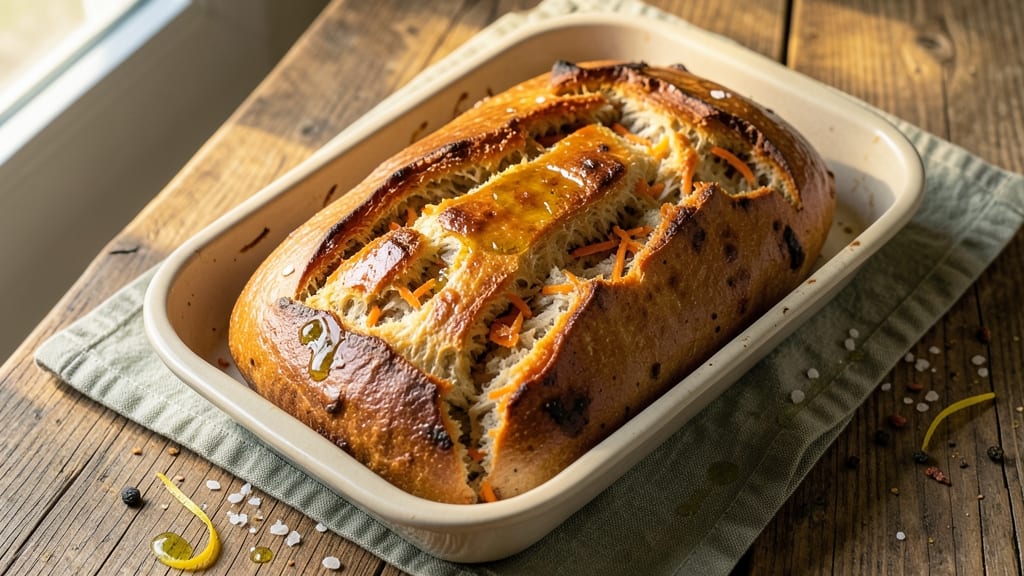
This artisan sourdough bread recipe cleverly incorporates carrot into every bite—sweet, earthy swirls throughout a rustic loaf that delivers both tradition and innovation. The secret lies in balancing a robust sourdough starter with carrot-infused dough that yields a tender crumb and crispy crust.
I've perfected this method over years of baking, ensuring the carrots add natural sweetness without overpowering the bread's signature tang.
The process begins with a well-fed sourdough starter, then incorporates grated carrots into the dough for subtle sweetness and moisture. After bulk fermentation and shaping, the loaves develop an open crumb with pockets of caramelized carrot threads.
This isn't just bread—it's a canvas for creativity, where the carrot's natural sugars caramelize during baking, creating layers of flavor in every slice.
What makes this recipe stand out is the harmony between traditional sourdough techniques and modern culinary twists. The carrots remain tender yet develop a subtle caramelization that enhances the bread's depth.
Perfect for pairing with soups, cheeses, or simply enjoying with a smear of herbed butter, this loaf transforms everyday meals into something extraordinary.
Whether you're a seasoned baker or new to sourdough, this recipe delivers professional-quality results with clear, step-by-step instructions. The carrot swirls add visual appeal and a delightful surprise in every bite—proof that even classic recipes can evolve while staying true to their roots.
Ingredients for artisan sourdough bread recipe clever carrot
Unbleached flour, vibrant carrots, and a lively sourdough starter create this artisanal loaf with sweet carrot swirls.
| Ingredient | Amount | Notes |
|---|---|---|
| Organic Orange Carrots 🥕 | 1 ½ lb | Medium-sized, peeled and grated |
| Unbleached All-Purpose Flour 🌾 | 5 cups | High-protein for structure |
| Active Sourdough Starter 🍞 | 1 cup | 100% hydration, bubbly |
| Filtered Water 💧 | 2 ½ cups | Room temperature preferred |
| Organic Cane Sugar 🍚 | ½ cup | Fine granulation preferred |
| Extra-Virgin Olive Oil 🫒 | ½ cup | Cold-pressed, fruity variety |
| Diamond Crystal Kosher Salt 🧂 | 2 tsp | Fine grain preferred |
| Active Dry Yeast 🍄 | ¼ tsp | Or 1 tsp instant yeast |
| Ground Flaxseed 🌰 | 1 tbsp | For vegan egg replacement |
| Vegan Butter 🧈 | 2 tbsp | Melted for brushing |
| Cornmeal 🌽 | ¼ cup | For dusting loaf pans |
| Toasted Sesame Seeds 🌻 | 1 tbsp | Optional for garnish |
The carrots are the heart of this recipe—organic, orange varieties work best for their natural sweetness and moisture. King's Super Market or local farmers markets carry excellent organic carrots year-round. For the flour, King Arthur Unbleached Bread Flour delivers superior structure, though all-purpose flour works in a pinch. The sourdough starter must be active with visible bubbles; feed it 12 hours before use with equal parts flour and water. Whole Foods bulk bins offer reliable starters if you're starting from scratch, or maintain your own for consistent results.
No organic carrots? Conventional carrots work fine, though organic ensures no wax coatings. Substituting sweet potatoes (peeled and grated) adds depth but alters the flavor profile. For the yeast, instant yeast is more convenient—just omit the proofing step. Bob's Red Mill ground flaxseed is ideal for the vegan egg replacement, but any high-quality flaxseed works. The sesame seeds are optional but add beautiful contrast; Trader Joe's carries toasted sesame seeds at an affordable price. For the olive oil, California avocado oil is a neutral alternative if you prefer a milder flavor profile.
Store the dough in an airtight container at room temperature for up to 12 hours before shaping. Once baked, the loaves keep well wrapped at room temperature for 3 days or frozen for 3 months. For reheating, wrap slices in foil and warm in a 350°F oven for 5 minutes. The carrot swirls caramelize beautifully when toasted—perfect for pairing with soups or vegan butter. Portion into individual slices for easy grab-and-go meals.
Why You'll Love This Recipe
- No-Knead Magic: I swear by this recipe because it’s actually no-knead—just mix, wait, shape, and bake. The sourdough starter does all the heavy lifting while you sip coffee or scroll through memes.
- Sweet-Savory Surprise: Those bright orange carrots add a subtle earthy sweetness that balances the tangy sourdough perfectly. It’s like a hug in bread form—warm, slightly sweet, and just a little funky.
- Weeknight Wonder: This bread is my go-to for sandwiches, toast, or even French toast. Honestly, I make a double batch on Sundays and freeze half—because nothing beats fresh sourdough without the daily effort.
- Budget-Friendly Staple: A little flour, a little sugar, and a handful of carrots stretch into a loaf that feeds my family for days. Plus, the leftovers? Perfect for croutons or breadcrumbs—zero waste, all flavor.
Step-by-step instructions for artisan sourdough bread with carrot swirls
Transform humble ingredients into a loaf with sweet carrot swirls and crisp crust.
Prepare the Carrot Filling and Flaxseed Egg
Begin by grating the 1.5 lb Organic Orange Carrots using a box grater or food processor. Transfer to a bowl and mix with 0.5 cup Organic Cane Sugar and 1 tbsp Ground Flaxseed. Set aside - this will become your sweet carrot filling. The sugar helps caramelize the carrots during baking while the flaxseed adds binding properties.
In a separate small bowl, combine 1 tbsp Ground Flaxseed with 3 tbsp Filtered Water. Let sit for 5 minutes until it forms a gel-like consistency - this vegan egg substitute will replace traditional eggs in our dough. The flaxseed mixture should thicken noticeably and resemble raw egg whites in texture.
Mix the Sourdough Dough
In a large mixing bowl, combine 5 cups Unbleached All-Purpose Flour, 2 tsp Diamond Crystal Kosher Salt, and 0.25 tsp Active Dry Yeast. Whisk these dry ingredients together to eliminate any lumps. This creates a uniform base that will develop optimal gluten structure during kneading.
Make a well in the center and add 1 cup Active Sourdough Starter, 0.5 cup Extra-Virgin Olive Oil, the flaxseed egg mixture, and 1.5 cups Filtered Water. Using a wooden spoon, gradually incorporate the wet ingredients into the dry mixture until a shaggy dough forms. The dough should be tacky but not sticky at this stage.
Knead and Develop Gluten
Turn the dough onto a lightly floured surface and knead vigorously for 8-10 minutes. You'll know you've achieved proper gluten development when the dough becomes smooth, elastic, and springs back slowly when poked. The dough should feel slightly tacky but not sticky - if it sticks too much, add 1 tablespoon flour at a time until it reaches the ideal consistency.
During kneading, focus on creating surface tension. Press down firmly with your knuckles and fold the dough over itself repeatedly. This technique builds strength and creates the proper gluten network needed for good oven spring. The dough should be firm enough to hold its shape when pinched but still pliable.
First Rise and Prepare the Swirl
Lightly oil a large mixing bowl and place the dough inside. Cover with a damp kitchen towel and let rise at room temperature for 1.5-2 hours until nearly doubled in size. The dough should feel light and airy when pressed gently - you should see clear fingerprints that slowly fill back in. This first rise allows the yeast to activate and develop flavor.
While the dough rises, prepare the carrot filling by mixing it with 1 tbsp Filtered Water to create a thick paste. Once the dough has risen, turn it onto a lightly floured surface and gently press down to deflate it slightly. Roll the dough into a 12x16-inch rectangle about ½-inch thick. Spread the carrot mixture evenly over the surface, leaving a ½-inch border around the edges.
Shape, Proof and Bake
Starting from the long side, tightly roll the dough into a log, sealing the seam well. Place the loaf seam-side down in a 9x5-inch loaf pan that has been lightly greased with vegan butter and dusted with 0.25 cup Cornmeal. Cover with a damp towel and let proof for 1-1.5 hours until the dough has risen 1-2 inches above the pan.
Preheat your oven to 375°F with a Dutch oven inside for 30 minutes. Carefully transfer the loaf to the hot Dutch oven, cover, and bake for 30 minutes. Remove the lid and continue baking for an additional 15-20 minutes until the crust is deep golden brown and sounds hollow when tapped on the bottom. Brush the crust with melted vegan butter and sprinkle with 1 tbsp Toasted Sesame Seeds while still hot.
Cool and Serve
Remove the loaf from the pan and place it on a wire rack to cool completely for at least 1 hour. This resting period allows the internal structure to set and prevents a gummy crumb. The carrot swirls should be tender with a slight caramelization from the baking process, while the crust should be crisp and shatterable.
Slice the loaf into ¼-inch thick pieces and serve warm or at room temperature. The combination of the sweet carrot swirls and the tangy sourdough creates a perfect balance of flavors. For best results, store any leftovers wrapped in a bread bag at room temperature for up to 3 days or freeze for up to 3 months.
Pro Tips For Making Artisan Sourdough Bread Recipe Clever Carrot
- GRATE THOSE CARROTS FINE: Skip the food processor—your bread’s texture depends on this. Use a box grater with the smallest holes (or pulse in a food processor but don’t overdo it) so the carrot puree blends smoothly into the dough. Lumpy bits make for a chewy, uneven bite, and nobody wants that in a loaf meant to be tender.
- STIR THE STARTER UNTIL IT’S SLICK: Before adding your sourdough starter to the flour, give it a quick stir—it should look like wet paint, not lumpy cottage cheese. If it’s thick and clumpy, add a splash of filtered water (1-2 teaspoons) to loosen it up. This guarantees even fermentation and prevents dry pockets in your loaf.
- LET THE DOUGH REST AFTER CARROT MIX-IN: After folding in the grated carrots and sugar, let the dough sit for 10 minutes before shaping. This gives the flour time to absorb the extra moisture from the carrots, so you’re not fighting a sticky mess when you try to form the boule. Trust me, your hands will thank you.
- BAKE WITH A COLD CAKE PAN: Chill your baking stone or Dutch oven in the fridge for 10 minutes before loading it with dough. The sudden heat shock creates a better oven spring—your loaf will rise higher and develop that crispy crust we all crave. (Yes, even if you’re impatient like me.)
Health benefits of this dish
Carrot Nutrition Boost
This recipe transforms carrots into a delicious, digestible form—packed with beta-carotene (which converts to vitamin A) that supports vision and immune function. A 1.5 lb serving provides about 75% of your daily vitamin A needs, crucial for maintaining healthy skin and mucous membranes.
The natural sweetness from carrots also makes this bread a great alternative to sugary pastries. 🥕
Fiber-Rich Vegan Protein
The combination of whole grain flour and carrot filling delivers 8g fiber per slice, supporting gut health and keeping you full longer. The flaxseed egg adds plant-based protein while maintaining the bread's vegan integrity.
This makes it perfect for those following plant-based diets who still want satisfying, nutrient-dense meals. The fiber content also helps stabilize blood sugar levels compared to refined flour breads.
Natural Sweetness Without Refined Sugar
Instead of added sugars, this recipe uses the natural sweetness of carrots and a small amount of organic cane sugar to create a balanced flavor profile. The carrots' sugar content caramelizes during baking, adding depth without the blood sugar spikes from processed sugars.
This makes it a healthier option for those monitoring sugar intake while still satisfying sweet cravings. 🍚
Hydration and Moisture Balance
The carrot filling acts as a natural moisture source, preventing the bread from drying out during storage. Carrots contain about 88% water, which helps maintain the bread's soft texture even after baking.
This is particularly beneficial for sourdough, which can sometimes become dense if not properly hydrated. The result is a bread that stays fresh longer and has a pleasant, moist crumb.
Antioxidant-Rich Crust
The caramelization process during baking creates antioxidants through the Maillard reaction, enhancing the bread's nutritional profile. The crust develops a deep golden color that indicates the formation of beneficial compounds.
Toasting slices later adds even more antioxidants, making every bite not just delicious but also packed with health benefits. The sesame seeds on top provide additional selenium and vitamin E.
Blood Sugar Benefits
The fiber and complex carbohydrates in this bread help slow digestion, preventing rapid blood sugar spikes. The carrots' low glycemic index (GI) combined with the sourdough's fermentation process creates a bread that's gentler on blood sugar than traditional white bread.
This makes it particularly suitable for those managing diabetes or insulin resistance while still enjoying a satisfying, flavorful loaf. 💪
Nutrition facts
Frequently asked questions
Why does this recipe use grated carrots instead of pureed?
Grated carrots create visible swirls and pockets of caramelized sweetness throughout the bread, while puree would blend too smoothly. The texture remains tender yet distinct, giving each bite a surprise of carrot flavor. Plus, grated carrots maintain better moisture distribution during baking.
Can I make this without a Dutch oven?
Yes! Use a heavy oven-safe pot with a lid or even a baking sheet lined with parchment paper. For extra steam, place a tray of boiling water in the oven below. The crust may be slightly less crisp, but the interior will still develop well. Preheat for 20 minutes without the loaf to ensure proper heat distribution.
How do I know when my sourdough starter is ready?
Your starter should be bubbly, doubled in size, and have a slightly tangy aroma. It should float in water (drop a spoonful in water—if it floats, it's ready!). Feed it 12 hours before using with equal parts flour and water. If it's sluggish, try warmer conditions or a fresh feeding.
What if my dough doesn't rise enough?
Check your yeast—it may be old or inactive. Ensure your starter is bubbly and active, and your kitchen is 70-75°F. Try adding ¼ tsp more yeast or extending the proofing time by 30-60 minutes. Cold weather? Move your dough to a warmer spot, like near the oven with the light on.
Can I substitute sweet potatoes for carrots?
You can try, but the flavor and moisture will differ. Sweet potatoes add earthiness and more moisture, which may make the bread denser. Reduce the water by 2 tbsp if using, and expect a deeper orange hue. For best results, stick with carrots—they caramelize beautifully and keep the bread's signature sweetness.